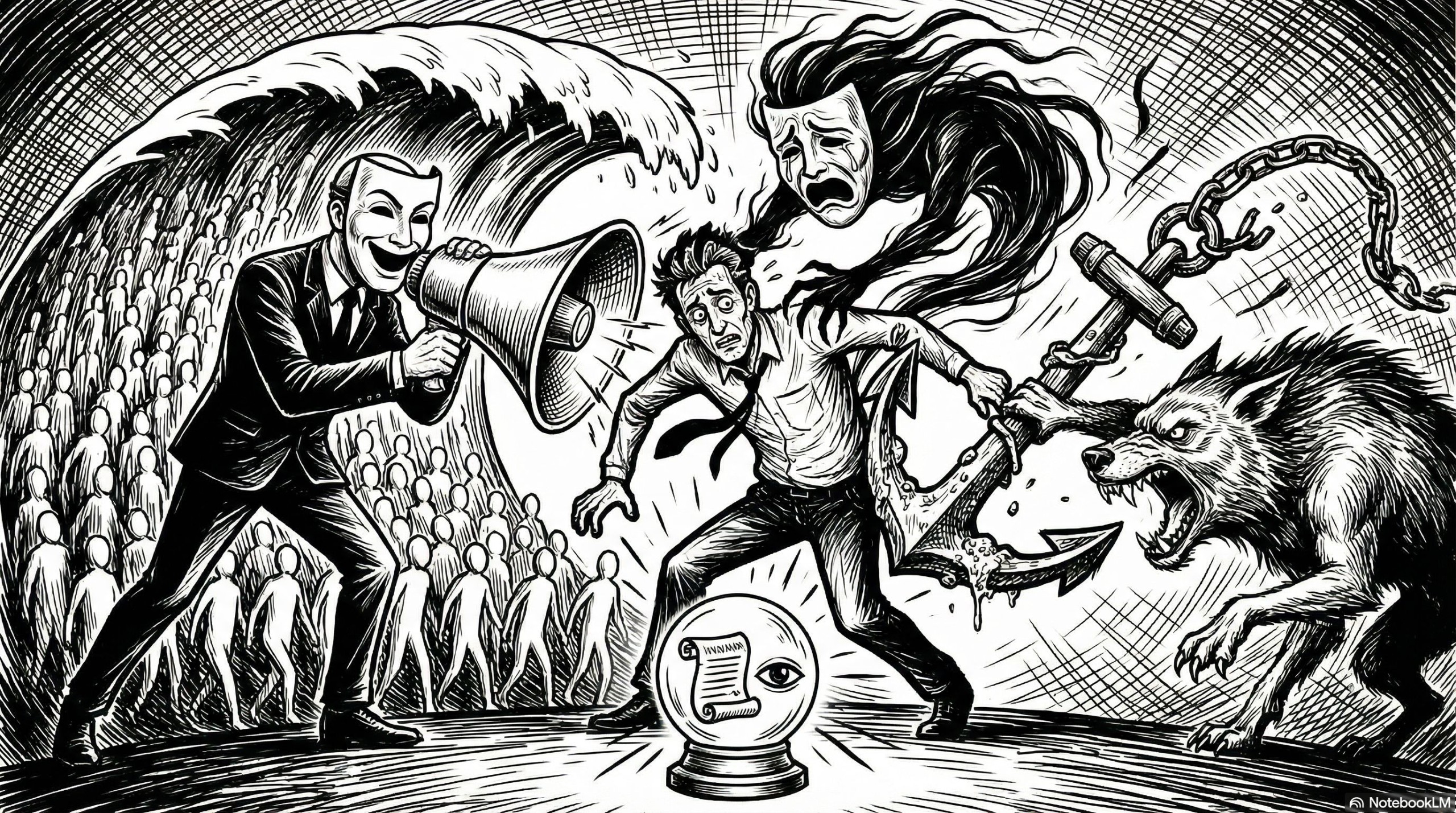
Logical Fallacies, Part 5: Personal Attack

There’s a difference between an insult and a logical fallacy.

When Donald Trump Jr. stood at a Saudi business summit in October 2025 and called No Kings protesters “older and fatter,” that was mockery. The room already agreed with him. Nobody in Riyadh was deciding whether American protesters had a point. He was playing to a friendly crowd. Rude, sure. Not a fallacy.

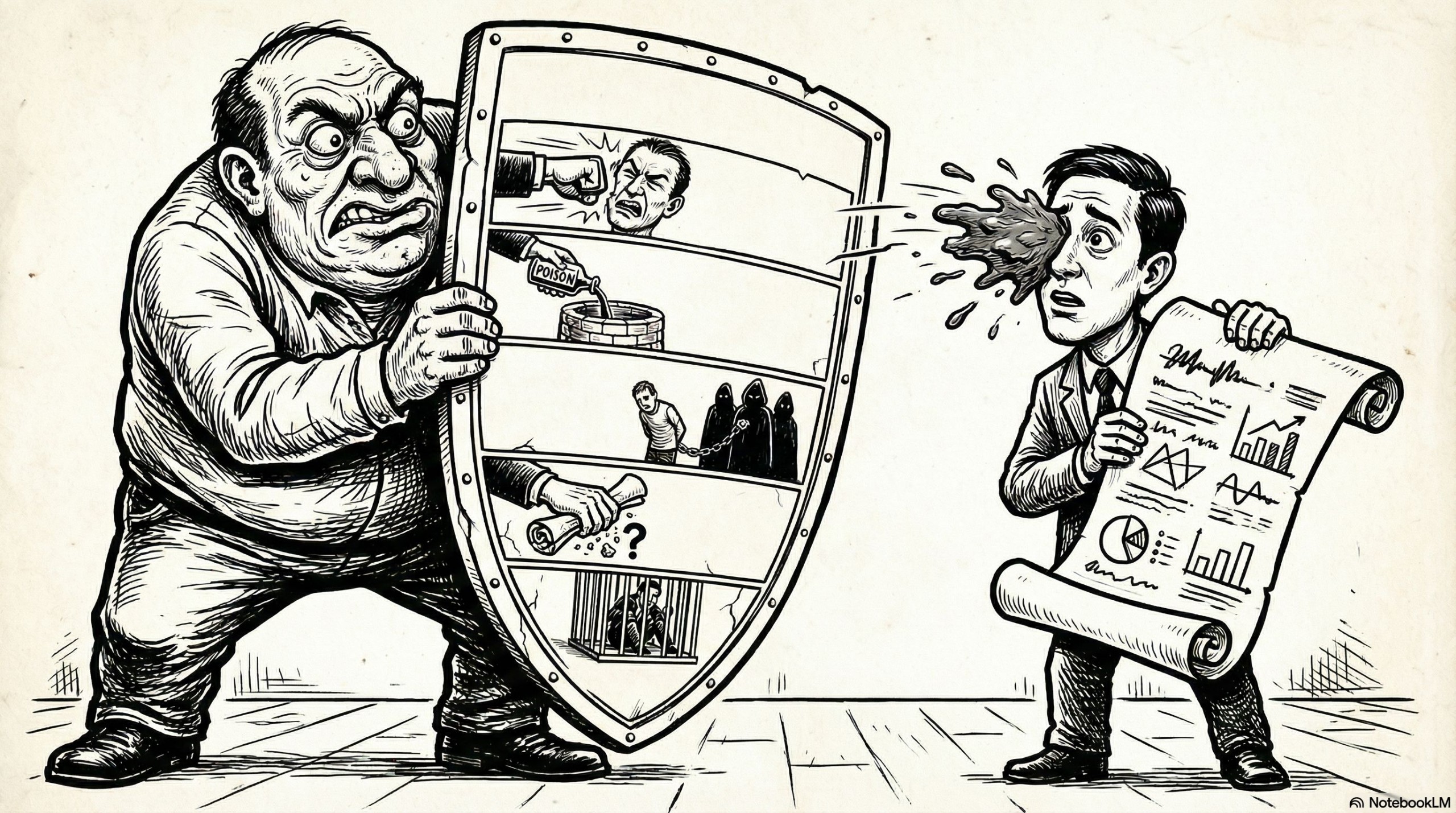
When mainstream outlets spend a news cycle calling a president “fascist,” “racist,” and “mentally defective” to millions of voters still forming opinions, that’s something else. The audience can be influenced. The label can replace the argument. And if the label sticks, the argument never has to be engaged at all.

That’s what separates the fallacies in this article from schoolyard name-calling. A personal attack only works as a logical fallacy when it targets someone in front of an audience that could have been persuaded by their argument. No audience, no fallacy. Just rudeness.

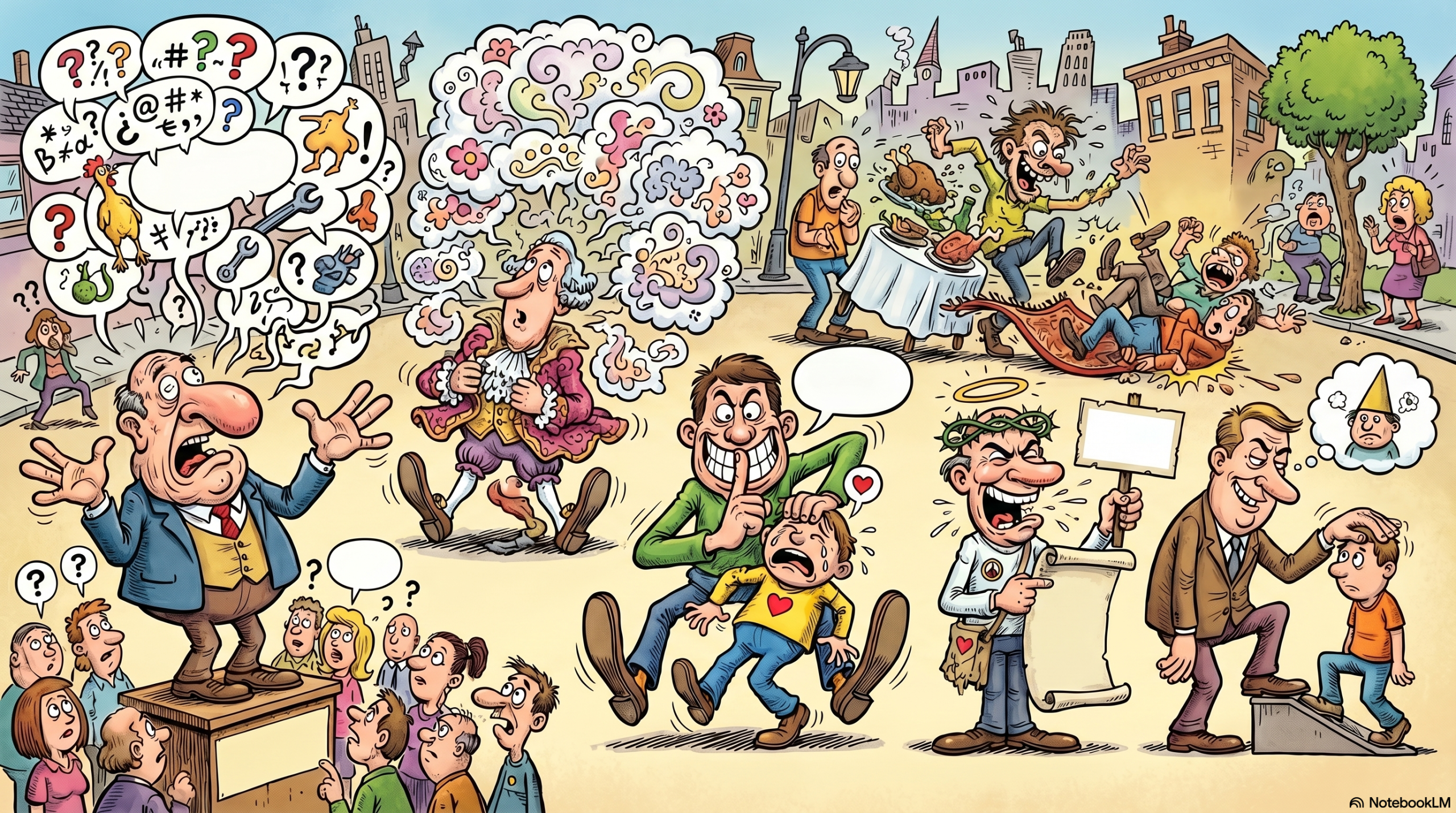
That’s today’s category. In Parts 1, 2, 3, and 4 we covered fallacies that dodge the point, rig the question, cook the books, and substitute pressure for proof. Those at least pretend to be about the argument. Today’s fallacies drop the pretense. They’re about you.

Read more

Logical Fallacies, Part 4: Illegitimate Authority


If you’ve been following American politics for the last few years, you’ve watched the word “existential” get beaten to death. Existential threat. Existential crisis. Existential danger to our democracy. Biden used it. Harris used it. Every cable news anchor with a teleprompter used it. They used it so often, and so loosely, that your average American who wasn’t already familiar with the term would be forgiven for concluding it means “imaginary.”

They do this with everything. Oligarchy. Anti-democracy. Fascism. They grab a word and bludgeon the public with it until the word loses all meaning. And there’s an irony so thick you could cut it with a knife: the people screaming about oligarchy are funded by billionaires. The ones screaming about anti-democracy spent years trying to remove a democratically elected president. And the fascism crowd is demanding that everyone march in lockstep or be denounced. Is it ironic? Un-ironic? Both. The words are accurate. They’re just aimed at the wrong people.

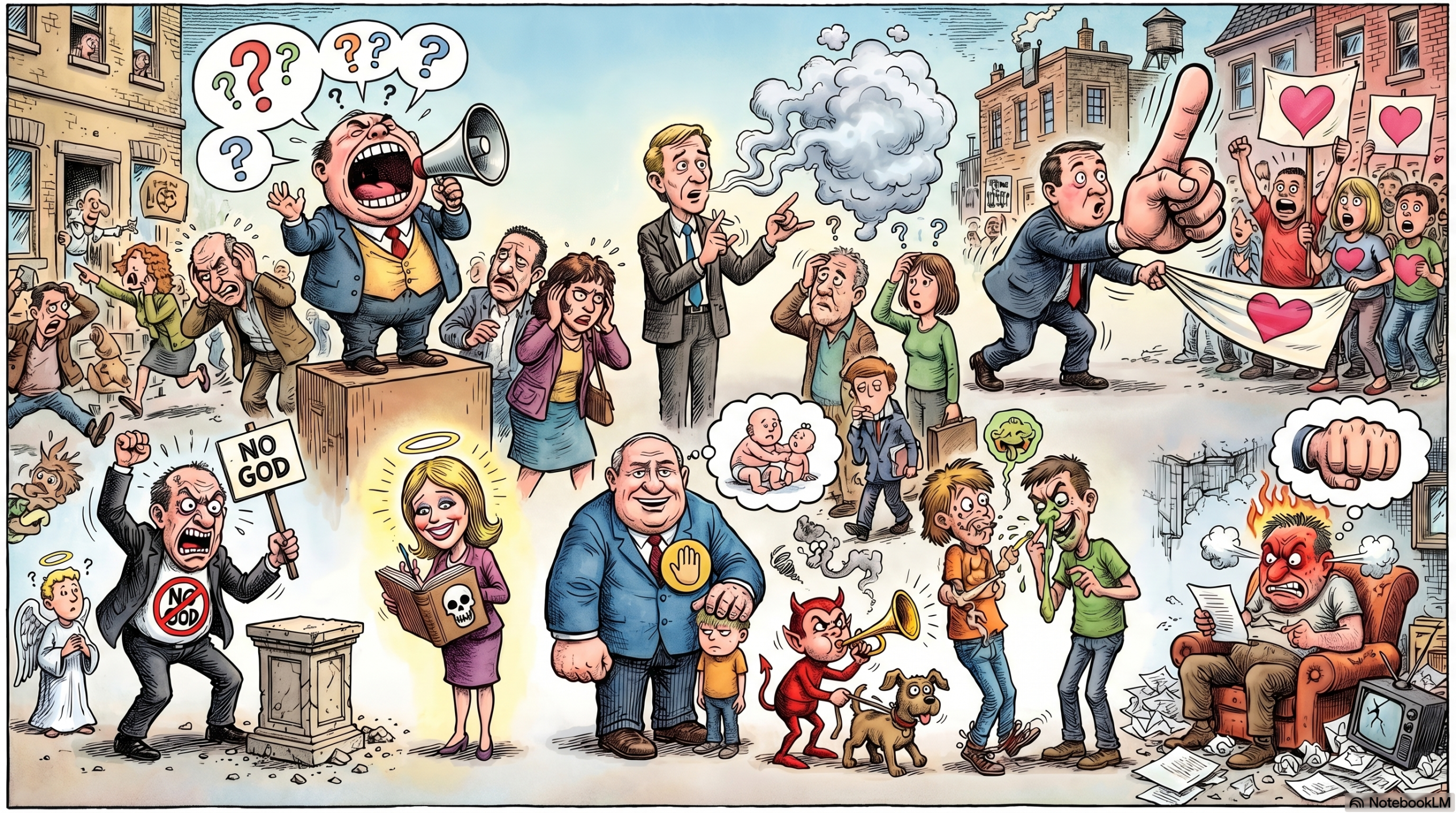
That’s what every fallacy in this article does. In Parts 1, 2, and 3 we covered arguments that dodge the point, rig the question, and cook the books. Today’s fallacies skip the evidence entirely and apply pressure instead. An authority said it. Everyone believes it. It feels true. It’s always been that way. It’s only natural. None of these are reasons to know something is true. They’re reasons to feel like you don’t need to check.

Read more

Logical Fallacies, Part 3: Bad Evidence


I saw a meme once of a stern-looking cop leaning into a car window. The caption: “Looks like you’ve had a bit too much to think.”

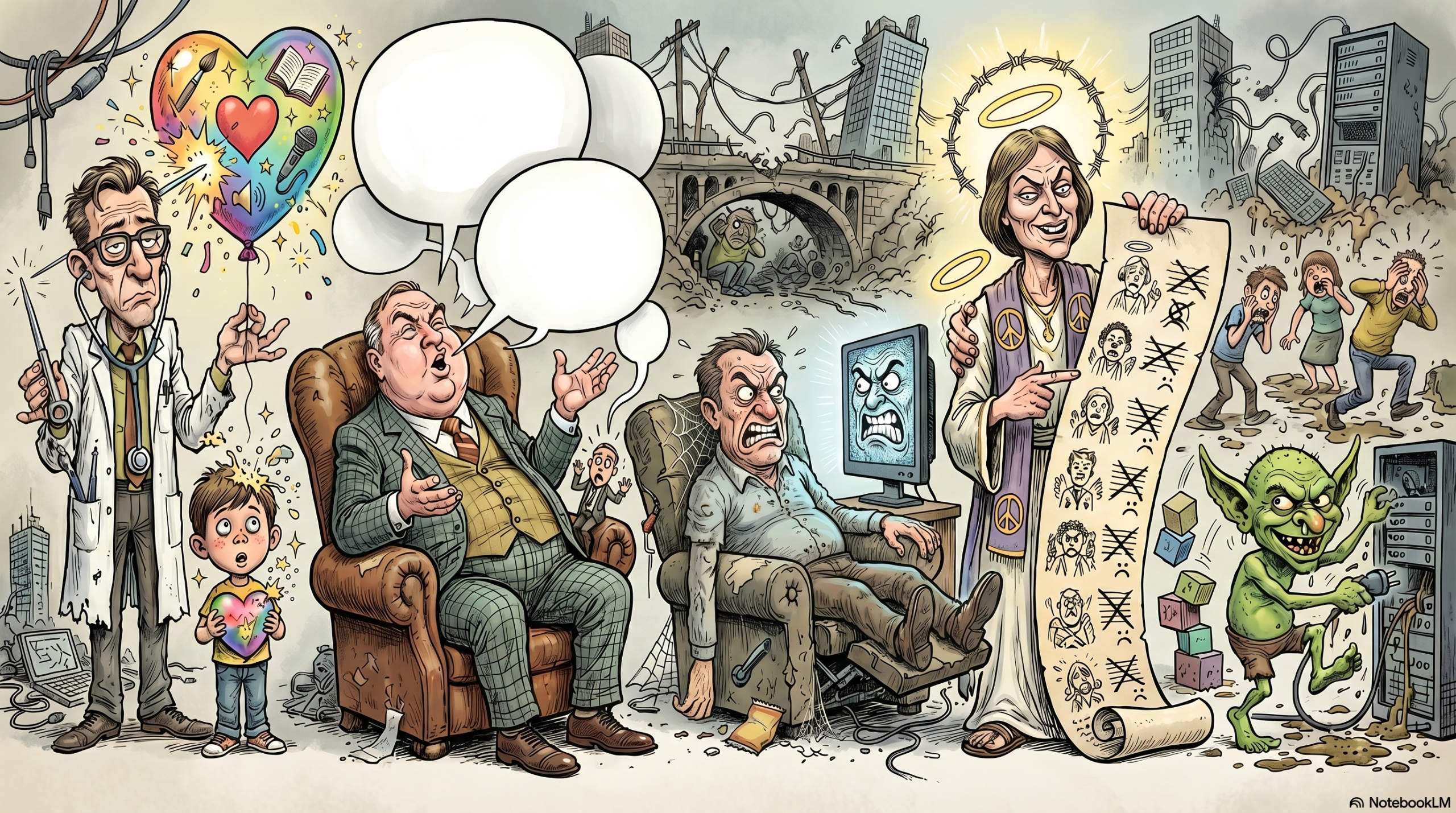
In Part 1 we covered fallacies that dodge the point. In Part 2 we covered fallacies that rig the question before you can answer it. Bad Evidence fallacies are sneakier than both, because they actually look like they’re doing the work. They come with numbers. Studies. Historical precedents. Personal testimony. They feel like proof. They just aren’t.

These are arguments that mishandle or fabricate evidence. They don’t dodge the question or rig the frame. They answer the question with data that doesn’t actually support the conclusion. And they’re harder to catch, because you have to check the evidence instead of just the structure.

Read more

Logical Fallacies, Part 2: False Framing


There are only two kinds of people in the world: those who believe in false dichotomies, and Purple Penguins.

If that sentence made you pause, good. You just felt a False Framing fallacy doing its work. The sentence has the structure of a reasonable claim. The options are set. But they’re rigged before you even get to evaluate them. There’s no third choice, no “wait, those aren’t the only two options,” no room to step back and question the setup.

That’s False Framing. And it’s more dangerous than the Misdirection fallacies we covered in Part 1, because misdirection at least lets you see the real argument before it changes the subject. False Framing makes the real argument invisible. It rigs the question so that any answer you give concedes the point.

Read more

Logical Fallacies, Part 1: Misdirection


Ronald Reagan loved telling Soviet jokes. One of his favorites went like this: An American and a Soviet citizen were comparing their countries. “We have freedom in the US,” the American said. “I can walk right up to the White House and shout ‘Reagan sucks!’ and no one will stop me.” “We have the same freedom,” the Soviet replied. “I can walk right up to the Kremlin and shout ‘Reagan sucks!’ and no one will stop me either.”

Reagan told that joke to Gorbachev’s face at the Iceland summit. He told it to audiences for years. The punchline works because the Soviet citizen technically said something true while completely dodging the actual point. That’s misdirection. And if you watched any coverage of the No Kings protests, you saw it everywhere.

Fallacies of Misdirection are arguments that dodge the real point. They might sound like a response, but the actual argument has been quietly swapped for something else. These are the most common fallacies in political debate because they’re the easiest to pull off. You don’t need a counter-argument. You just need to make the real argument disappear.

Read more

The Clean Tub Equation


Your bathtub is dirty. You know it’s dirty. Every time you step in you notice it, and every time you step out you think,

I really need to clean that.

You don’t clean it.

Not because you’re lazy (although, sure, maybe a little). Not because you don’t care. You don’t clean it because the math doesn’t work yet.

Read more

The Abortion Wars, Part 5: The Pattern


Part 5 of 5

In Part 2, I mentioned a woman named Terri Schiavo. Time to come back to her.

On February 25, 1990, Terri Schiavo suffered cardiac arrest in her Florida apartment. She was twenty-six. The resulting oxygen deprivation left her severely brain-damaged, and she was eventually diagnosed with a persistent vegetative state. She was not dying. She was not on a ventilator. She was breathing on her own. She received nutrition through a feeding tube.

Read more

The Abortion Wars, Part 4: Racketeers for Life


Part 4 of 5

In 1986, the National Organization for Women sued a man named Joseph Scheidler under RICO.

If that acronym sounds familiar, it should. The Racketeer Influenced and Corrupt Organizations Act was passed in 1970 to prosecute the Mafia. It was designed for organized crime (for extortion, loan-sharking, murder-for-hire, drug trafficking). The law’s creators never imagined it would be pointed at a Catholic pro-life activist from Chicago who organized sidewalk protests outside abortion clinics.

Read more

The Abortion Wars, Part 3: The Legal Fiction


Part 3 of 5

Norma McCorvey wanted an abortion. What she got was a pseudonym.

In 1970, McCorvey was pregnant with her third child in Texas, where abortion was illegal except to save the mother’s life. She was referred to two attorneys, Linda Coffee and Sarah Weddington, who needed a plaintiff for a federal challenge to Texas’s abortion law. They needed her name on the filing. They didn’t particularly need her.

Read more

The Abortion Wars, Part 2: The Roots


Part 2 of 5

In 1798, an English clergyman named Thomas Malthus published An Essay on the Principle of Population and managed to be spectacularly wrong about nearly everything in it. His thesis was simple: human population grows faster than food production, so eventually everyone starves. His solution was equally simple: stop helping the poor. Charity, he argued, only encouraged the lower classes to breed, which made the problem worse. Nature would handle things if we’d just step aside and let the weak die off. He was wrong about the math (agricultural innovation has consistently outpaced population growth for over two centuries), wrong about the economics, and wrong about human ingenuity. But being wrong about everything didn’t stop his ideas from becoming enormously influential. It rarely does.

Read more