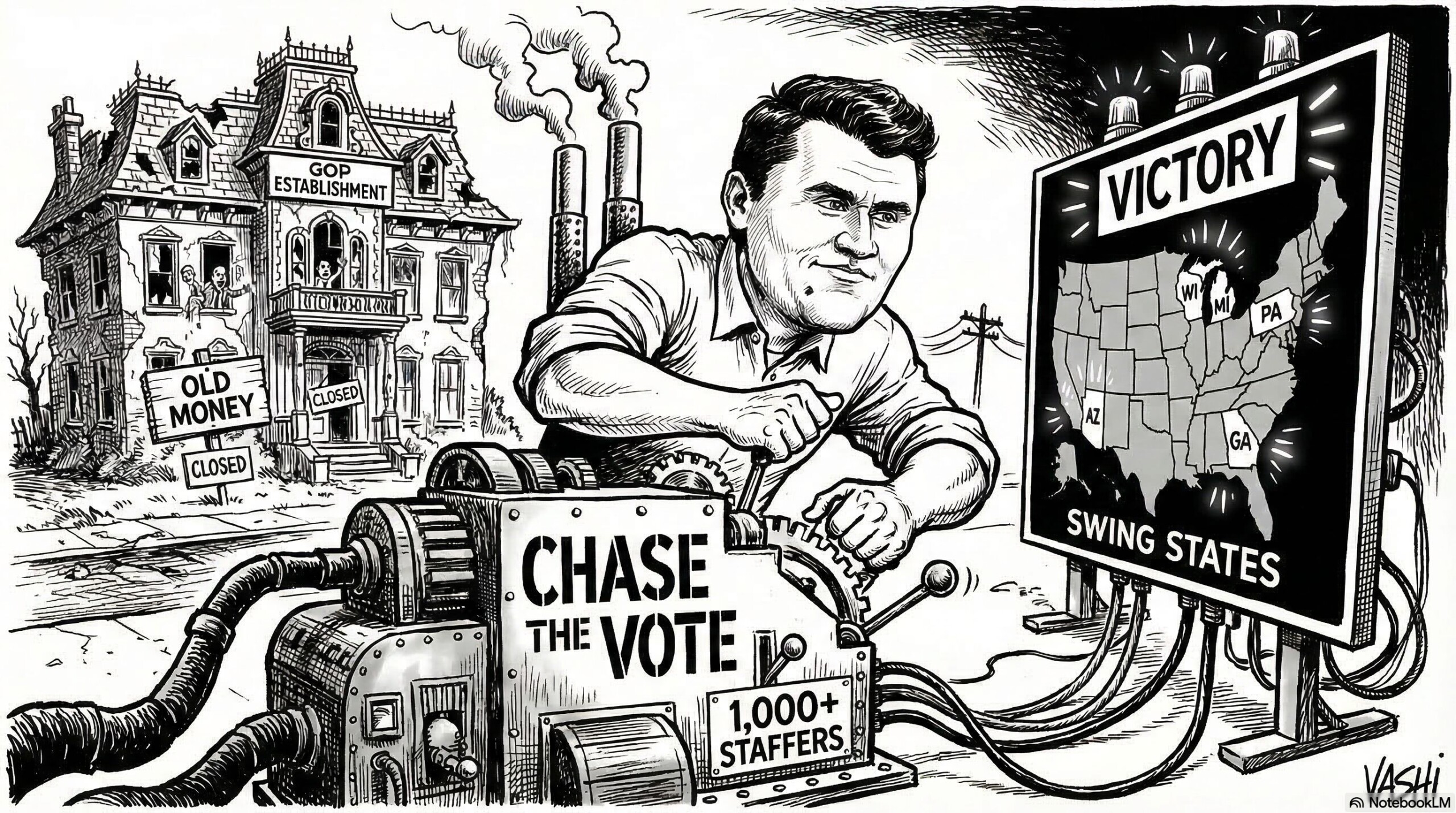
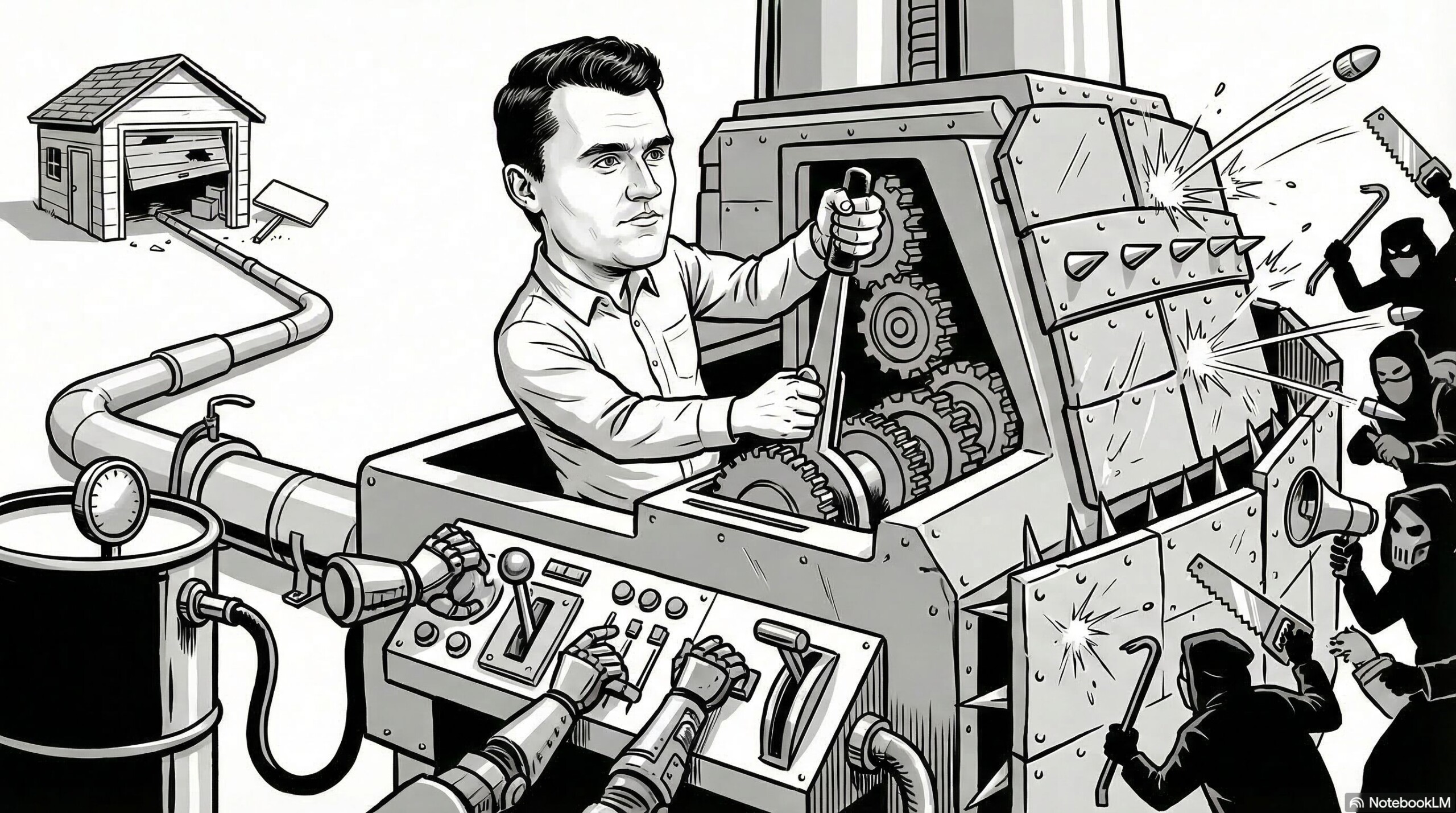
Being Charlie, Part 4: The Generator


Fourth in a five-part series on what it would actually take to mean it when you say “I am Charlie Kirk.”


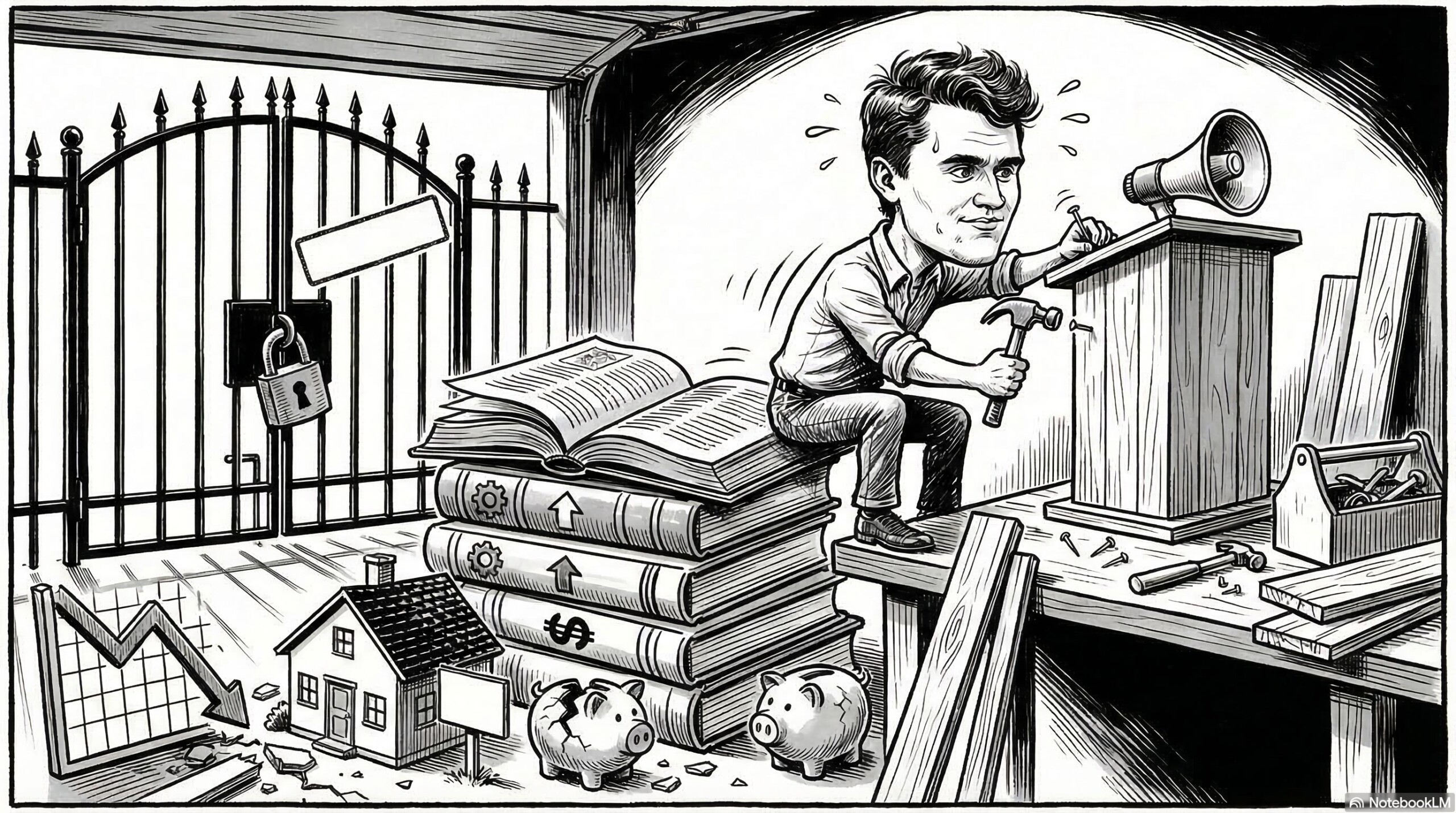
There’s a moment in The Great Gatsby that most people remember wrong. They remember the parties, the music, the lights, the crowds pouring into Gatsby’s mansion. They remember the green light across the water. What they forget is how the story ends: not with Gatsby’s death, but with the observation that the people who destroyed him were careless. They smashed things and retreated into their money, and let other people clean up the mess.

Gatsby’s crime wasn’t failure. It was success, the wrong kind, achieved the wrong way, by the wrong person. He didn’t inherit his fortune; he built it. He didn’t join the old-money establishment; he built a bigger house next door. He threw open the doors and invited everyone, and for a while it worked. But the moment his success threatened the structure that the old money depended on, the system disposed of him. Not by confronting him directly, Tom Buchanan didn’t pull the trigger. He pointed the gun in the right direction and let someone else do it.

Read more

Being Charlie, Part 3: Meat and Potatoes


Third in a five-part series on what it would actually take to mean it when you say “I am Charlie Kirk.”


There’s a word people use without thinking about what it actually means: politics.

Strip away the civics-class veneer and substitute what the word actually describes in practice: manipulation. Every campaign ad, every rally speech, every carefully timed endorsement, every leaked memo, every strategic silence — it’s all manipulation. The nice version is “persuasion.” The honest version is that you’re trying to get people to do what you want them to do, and the ones who are best at it are the ones who make people feel like it was their own idea.

This isn’t a cynical observation. It’s the operating reality that anyone who enters politics eventually confronts. And here’s the paradox that sat waiting for Charlie Kirk when he stepped from campus organizing into the national political machine: if your cause is liberty — if your entire argument is that people should think for themselves, govern themselves, take responsibility for themselves — then the tool you’re forced to use to advance that cause is the opposite of the cause itself. You’re manipulating people toward freedom. Coercing them toward self-governance. Selling independence to a populace that, if we’re being honest, mostly wants to be told what to do.

Read more

Being Charlie, Part 2: The Gear-Shift


Second in a five-part series on what it would actually take to mean it when you say “I am Charlie Kirk.”


There’s a story about Alexander the Great — probably apocryphal, but useful. The version most people know is that he wept because there were no more worlds to conquer. The version closer to the ancient sources is darker: he wept because he couldn’t hold what he’d already taken. He was the greatest conqueror of the ancient world and a catastrophic administrator. His empire didn’t survive him by a single generation. It fractured into warring successor states before his body was cold.

This is the oldest problem in leadership: the skills that build a thing are not the skills that sustain it. Every founder hits this wall. The ones who conquer it learn to shift gears, from doing to delegating, from instinct to infrastructure, from moving fast to building things that hold. The ones who don’t end up like Alexander: brilliant, dead at thirty-two, and leaving behind a machine that nobody else knows how to operate.

Read more

Being Charlie, Part 1: Just a Kid


First in a five-part series on what it would actually take to mean it when you say “I am Charlie Kirk.”


There’s a scene in The Delta Force (1986) that captures something most people have forgotten. Terrorists hijack a plane and demand the Jewish passenger come forward. Father O’Malley, played by George Kennedy, stands up, walks forward. Abdul, the terrorist, says, “I did not call you.” The priest replies, “You called for all the Jews. I’m Jewish, just like Jesus Christ. You take one, you gotta take us all.” He was making a declaration: you meant to isolate them, but I’m stepping into their place.

That was the spirit of “I am Charlie Kirk” when people first said it after his assassination in September 2025. It meant: you thought you’d silence him, but I will carry on his work. I am the next Charlie Kirk.

Read more

A Conversation with Claude: How soon will Local AI be commonplace?


The following is a conversation between me and Anthropic’s Claude AI. The reason I was wondering this is because there’s a trend within technology to move toward more personalized use. If you think about the room-size computers of the 50s, the closet sized in the 70s, desktop in the 80s, laptops at the turn of the century and today most people carry their computer in their pocket (smart phones). It’s foreseeable that Localize AI (run on your own device without needing to access the web) is not that far away.

Danny:
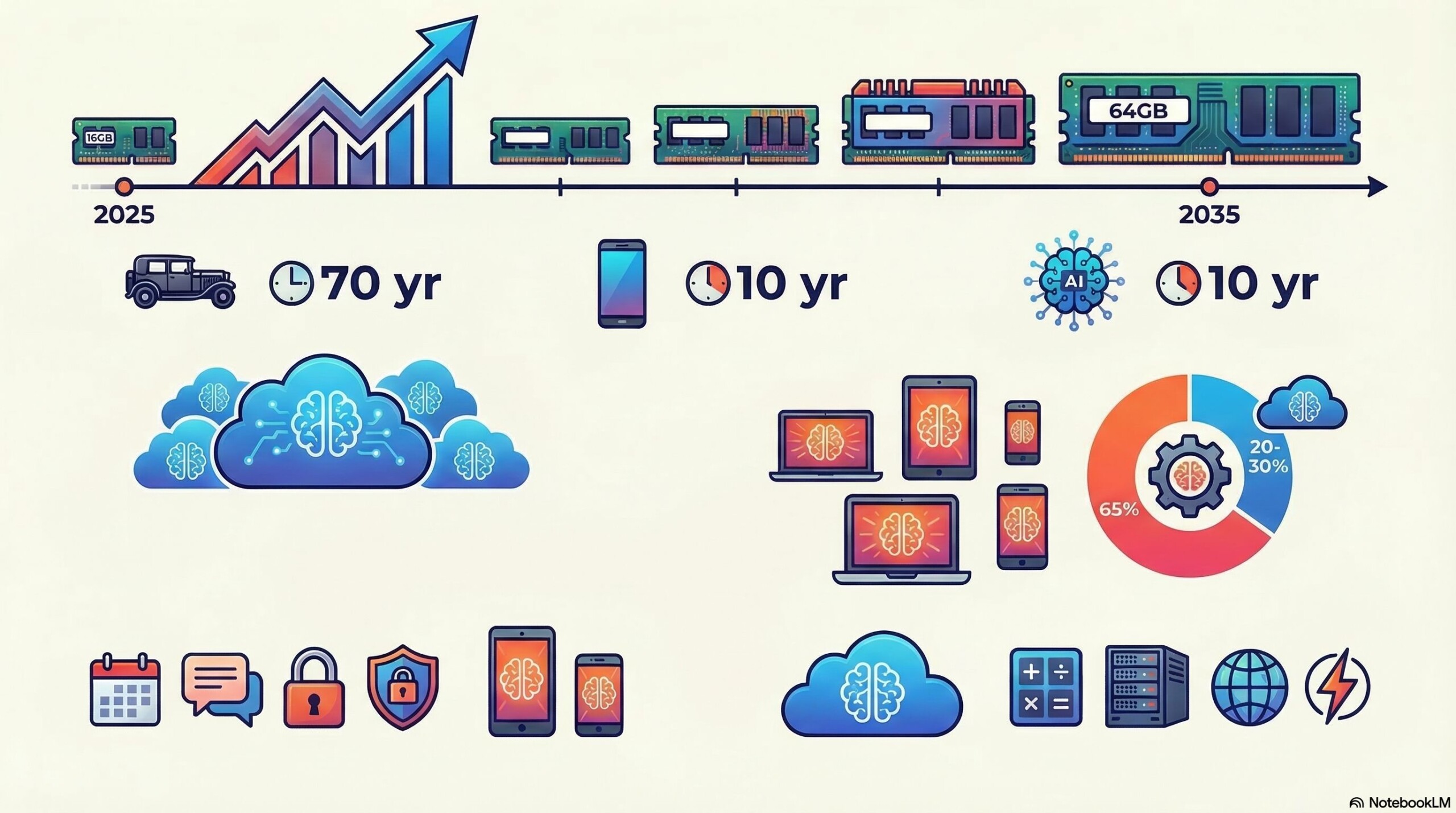
Given the recent (20+ years) rate of advancement in computers, what will be the common ram size for computers in 10 years. For reference, what’s the current common ram size today?

CLAUDE: RAM Progression: Historical & Projected

Current common RAM (2025):

  • Budget laptops/desktops: 8GB
  • Mainstream consumer: 16GB
  • High-end consumer: 32–64GB

Read more

Advice to Libertarians (Part 2): The Fence and the Field

Part 2 of 2 (Read Part 1 here.)

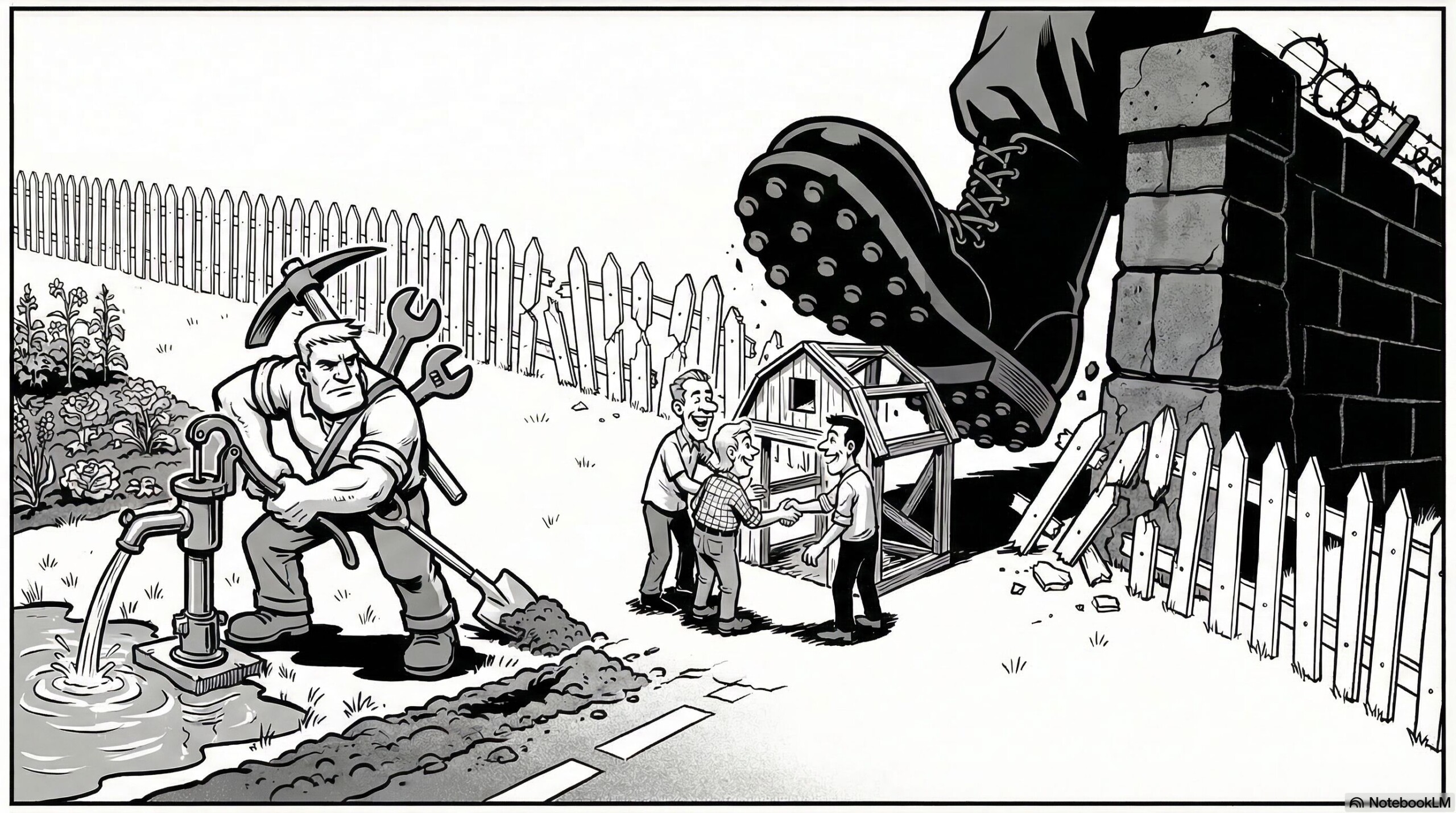
Across America there are all kinds of fences. Tough sturdy fences designed to limit the movement of massive, beasts who could trample a lesser fence without even thinking Then there are those smaller, decorative fences, designed to look ice, but also to mark territory. The white picket fence has been a symbol of the American dream for a long time. It’s not a very sturdy fence, and most people could knock it over by just leaning on it, but it served as a suggested barrier, to be respected by those who chose to be civilized and respectful.

The image of the white picket fence has stayed with me because it captures something most political philosophies get wrong about the relationship between freedom and structure. The Collectivist looks at the field and sees animals that need to be penned and design their fences accordingly. The Anarchist looks at the fence and sees an offense against human nature. The Libertarian — the serious one, not the bumper-sticker variety — looks at both and understands that the private property only works because the fence is respected, and only holds because people mostly choose not to test it.

Read more

Advice to Libertarians (Part 1): The Free-Range Steer


There’s a concept in cattle ranching called “low-stress handling.” The idea is simple: you design the chutes and pens so the animals move where you want them to go without realizing they’re being directed. No prodding needed. No resistance. Just architecture that exploits the animal’s natural tendency to follow the path of least resistance.

The cow thinks it’s walking freely. The rancher knows better.

Read more

Advice to Moderate Democrats (part 2): The Bitter Cup

Part 2 of 2 

I just made myself a cup of coffee, French press, picked one up at an estate sale for a dollar. The instructions I found online were specific: let the grounds steep in the hot water for exactly four minutes. Any longer and too much bitterness seeps out, and you’ve ruined what should have been a good cup.

The power of Collectivism works the same way.

Read more

Advice to Moderate Democrats (Part 1): The Wrong Threat


Part 1 of 2 

George Orwell was a Socialist.

Not secretly or reluctantly or in a “well, technically” kind of way. He was a committed, vocal, lifelong democratic socialist who wrote that every serious line he’d produced since 1936 was “against totalitarianism and for democratic socialism.” He joined a Marxist militia in the Spanish Civil War and fought on the front lines for the “Republican”* cause.

And then he spent the rest of his life writing the two most devastating indictments of Collectivism in the English language.

Read more

Straddling the Middle of the Wedge: The Peace and Prosperity Zone

Over the past few weeks I’ve laid out a political framework, the Wedge, that replaces the broken Left-Right spectrum with something that actually describes how power works. Collectivism vs. Individualism on the horizontal axis, the Leader/Follower gap on the vertical, and a wedge shape that widens toward Collectivism because centralized control structurally requires hierarchy.

I also walked through every position on that wedge and named their weaknesses, including the weaknesses of my own tribe.

Now I want to zoom in on the middle.

Read more