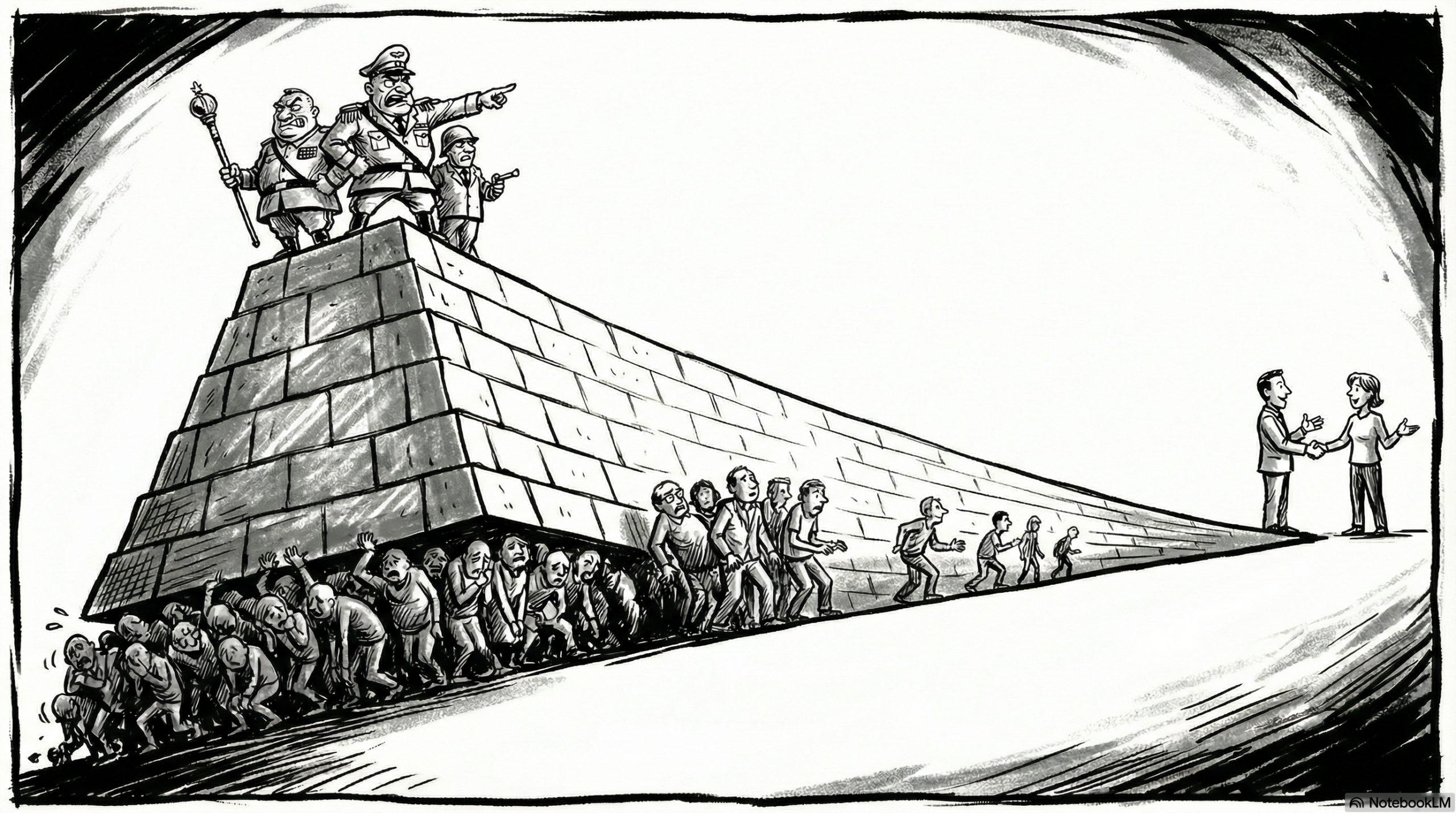
Walking the Wedge: Where Everyone Actually Stands


Part 2 of 2 

Yesterday I laid out the Political Wedge,  a two-dimensional spectrum with Collectivism and Individualism on the horizontal axis and the Leader/Follower gap on the vertical. The shape is a wedge because Collectivism structurally requires hierarchy while Individualism structurally resists it. If you missed it, read Part 1.

This week: where does everyone actually fall?

Ground rule before we start. Every position gets its strength acknowledged and its structural weakness exposed. The credibility of any framework depends on the person using it being willing to apply it honestly to their own tribe. So that’s what I’m going to do.
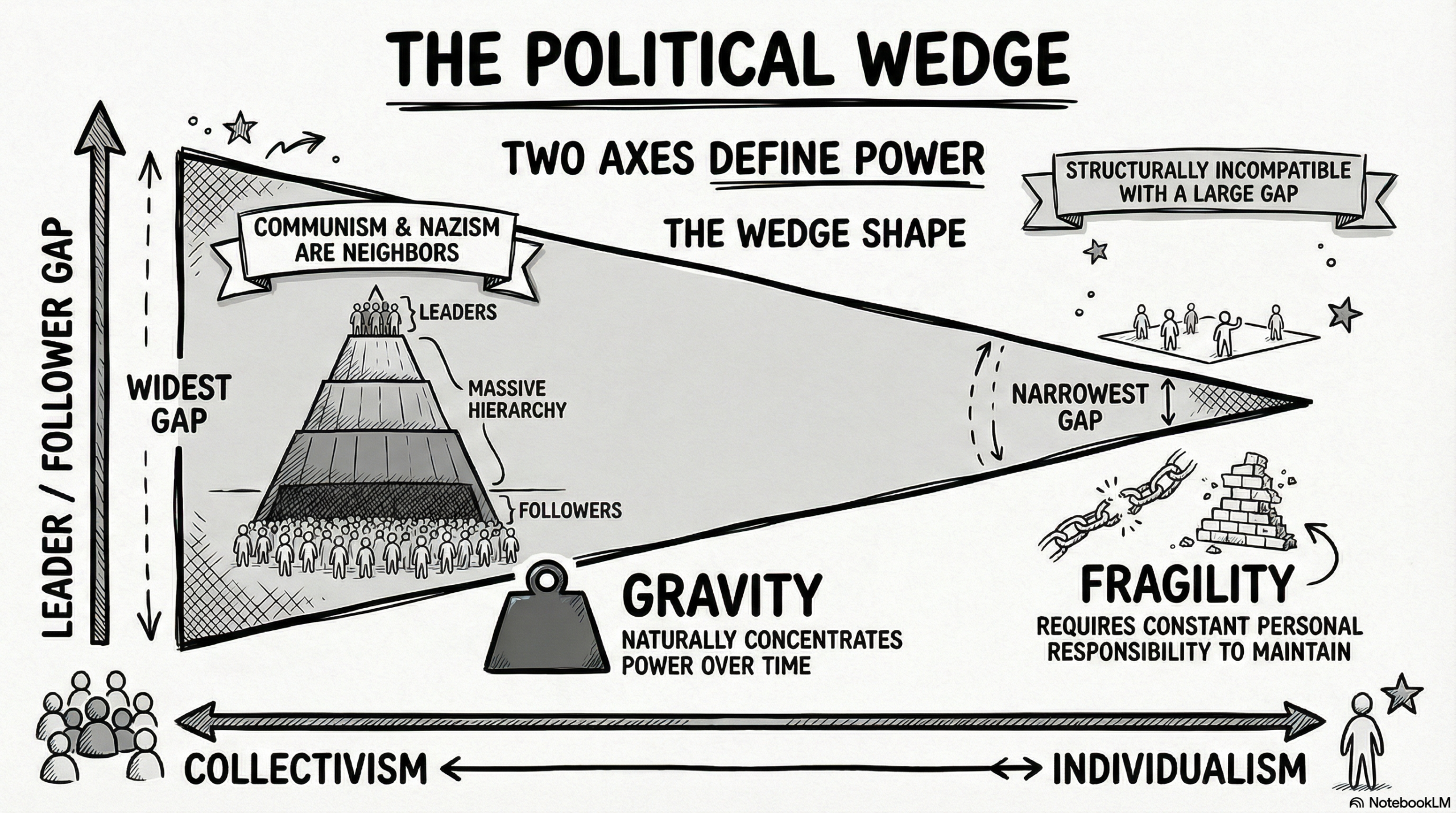
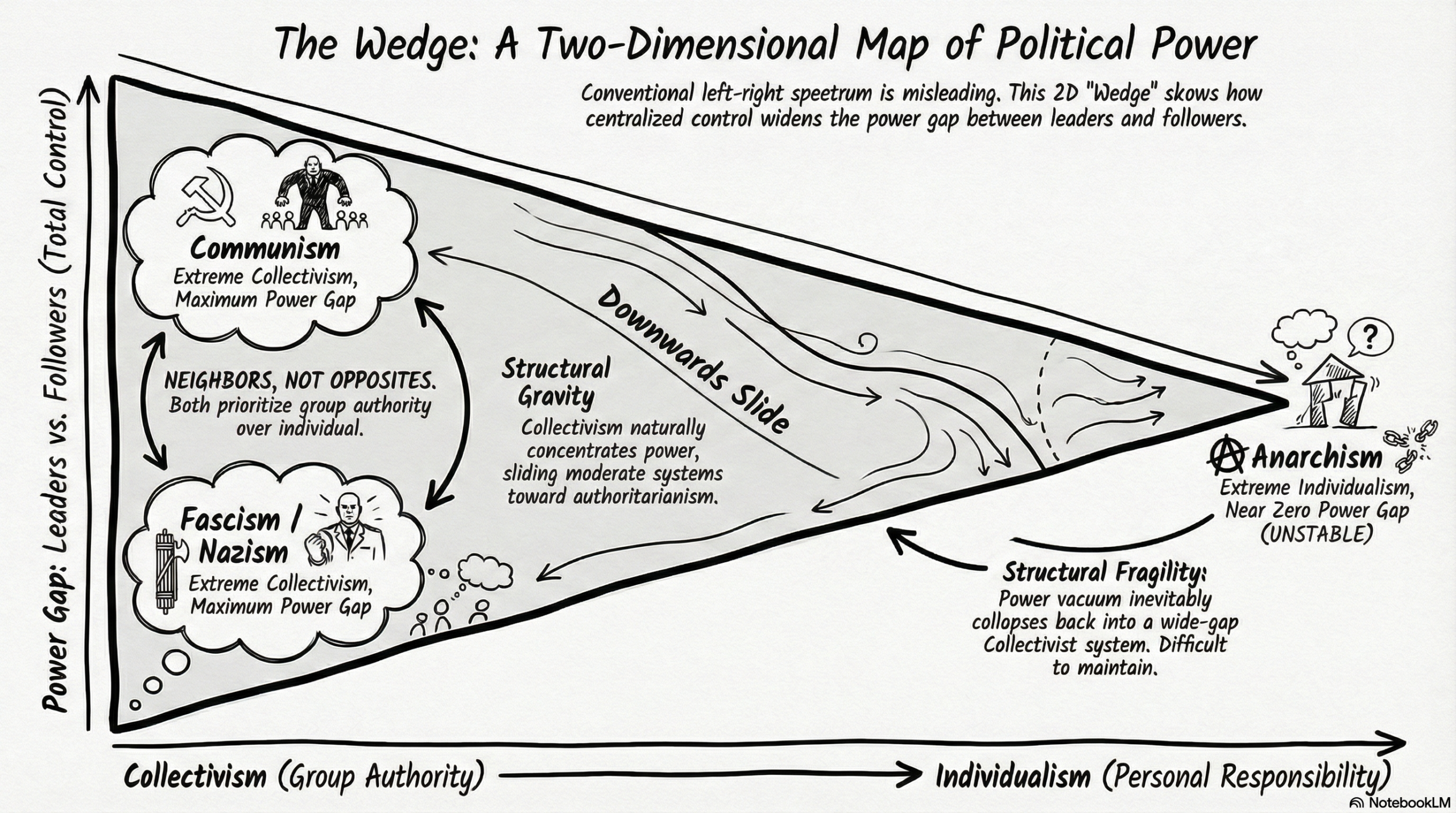
Read more

The Political Wedge: Why the Spectrum You Learned Is a Lie

[Click to view detailed infographic]
Part 1 of 2 

Trump recently promised he wouldn’t get the U.S. into a war. It’s the kind of line every politician delivers, and most people nod along without thinking about it too hard. But this one stuck with me, not because of what he said, but because of what it exposed.

Republicans and Democrats don’t just disagree about war policy. They disagree about what the word “war” means.

Look at the pattern. Republican military engagements have historically come with specific goals, timelines, and exit strategies. H.W. Bush’s Gulf War had a clear objective, liberate Kuwait, a broad coalition and a withdrawal. Reagan’s Grenada was in and out. Democratic military engagements, by contrast, have a habit of becoming open-ended nation-building projects: LBJ’s Vietnam, Obama’s Libya.

Clean story. Except it falls apart the moment you say the name George W. Bush.

Read more