The Compassionate Hatemonger
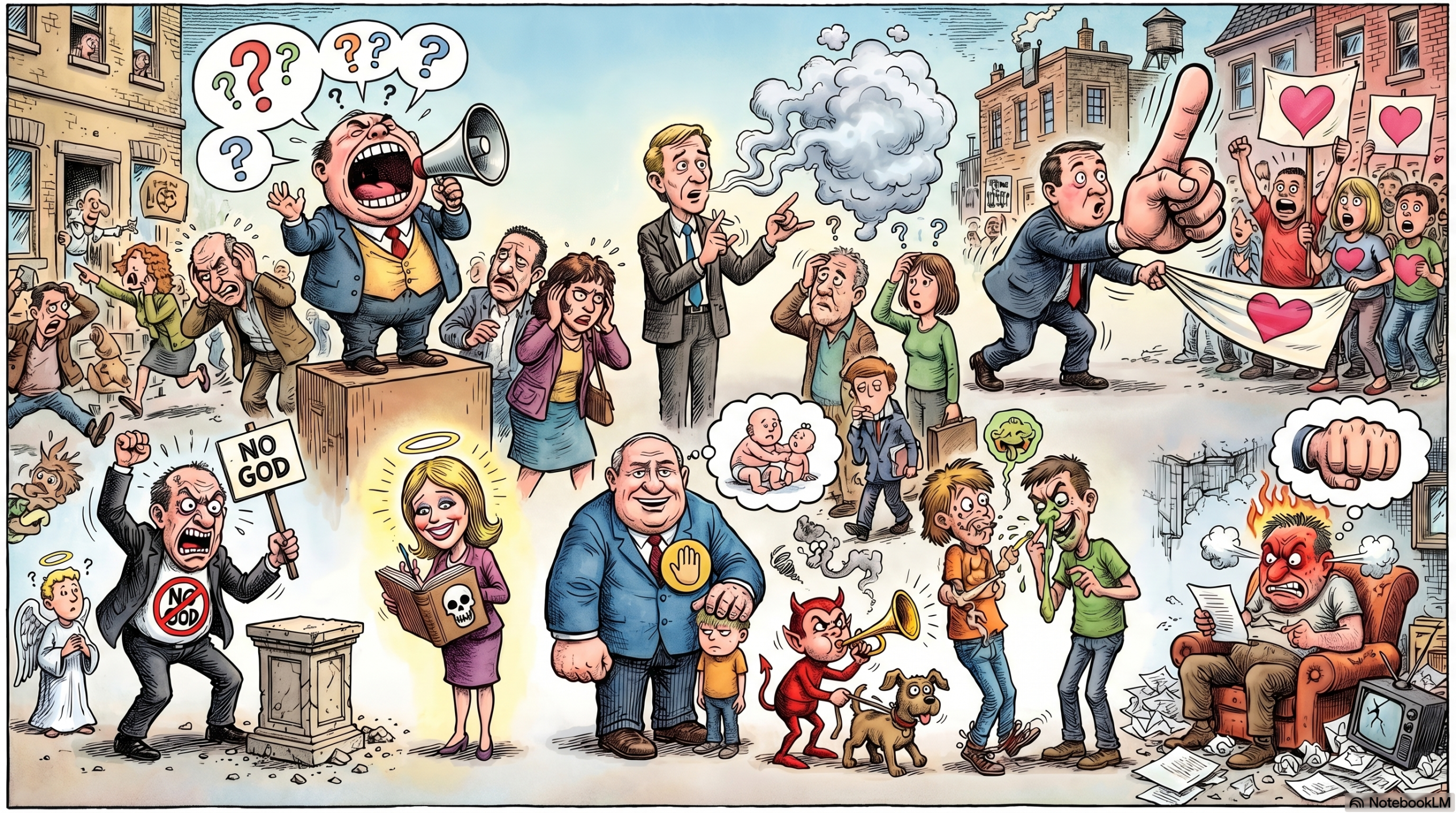
It starts with a screenshot. Someone said something online — maybe it was clumsy, maybe it was genuinely offensive, maybe it was a joke that didn’t land — and now the Compassionate Hatemonger has found it. Within hours, the machinery is running. The offending post is shared with breathless commentary. A list is assembled: who liked it, who commented approvingly, who failed to condemn it quickly enough. Names are tagged. Employers are contacted. The Compassionate Hatemonger is not angry, you understand. He is concerned. He is doing this because he cares about people. He is making the world safer.
By destroying someone’s life over a tweet.

The Compassionate Hatemonger keeps lists. Not literally (usually), but functionally — a running mental catalog of people who have been identified as Bad. The lists update daily. Yesterday’s ally can become today’s target if he says the wrong thing, follows the wrong person, or fails to perform the right public ritual of denunciation when called upon. The lists are maintained with the same meticulous energy that the Hatemonger claims to oppose. He will tell you, with complete sincerity, that he is fighting hate. He will not notice that his primary daily activity is hating people.
That’s the false identity. The Compassionate Hatemonger presents himself as a Guardian. A protector of the vulnerable. Someone standing between the marginalized and their oppressors. And he believes it. That’s what makes him different from the Booger Head (who knows he’s causing chaos and enjoys it). The Compassionate Hatemonger genuinely thinks the lists are righteous. He has convinced himself that hate becomes love when it’s directed at the right targets, that cruelty becomes justice when the victim has been properly labeled.
Here’s what he never does: forgive. Think about that for a second. Every moral system in human history — religious or secular — includes some mechanism for repentance, correction, or redemption. The Compassionate Hatemonger’s system has none. Once you’re on the list, you’re on the list. Apologies are parsed for insufficiency. Changed behavior is dismissed as performative. The only acceptable response to being targeted is to disappear, and even that isn’t always enough.
The real damage goes beyond the individual targets (though those people’s lives are genuinely wrecked). The deeper damage is to the idea of compassion itself. Every time the word “hate” is used to describe a mild disagreement, it loses meaning. Every time “safety” is invoked to justify silencing someone, it cheapens the concept for people who are actually unsafe. The Compassionate Hatemonger has burned through so much moral vocabulary that the words barely mean anything anymore. When everything is hate, nothing is.
A lot of well-meaning people get pulled into this. They see the Hatemonger’s posts, feel the genuine emotional pull of wanting to protect people, and share the outrage without examining it. They don’t realize they’ve joined a mob. They think they’ve joined a movement. The Compassionate Hatemonger counts on that confusion.
If you recognize this pattern in yourself, here’s the question you need to sit with: When was the last time you extended to someone you disagreed with the same compassion you claim to be fighting for? If the answer is “never,” then you’re not compassionate. You’re just a hatemonger with better marketing.
The Profoundly Vague
“We need to hold space for the complexity of this moment and center the voices that have been historically marginalized in conversations around systemic accountability.”
Quick: What does that sentence mean? Take your time. Read it again if you need to.
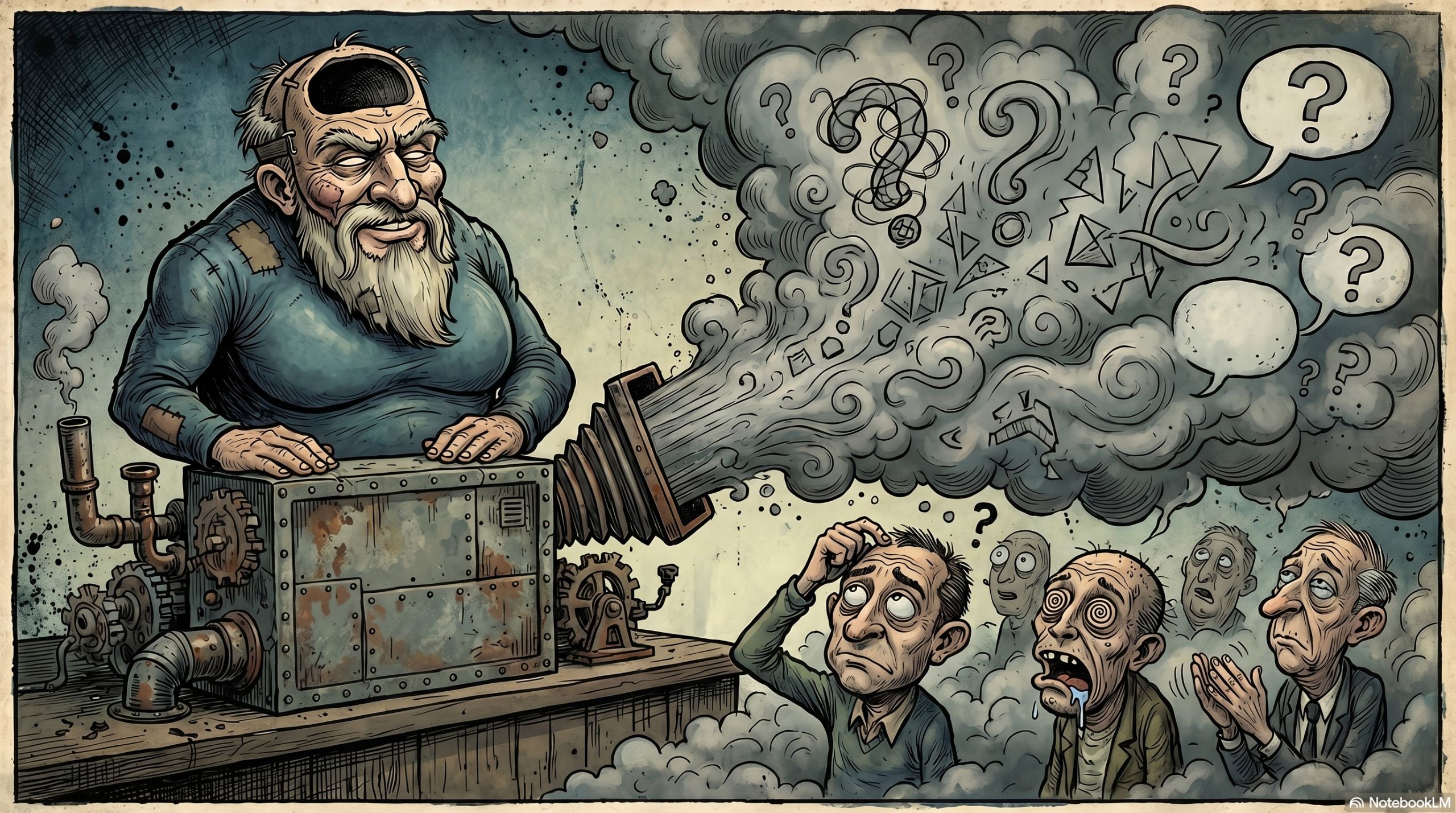
It means nothing. But it sounds like it means something, and that’s the entire operating principle of the Profoundly Vague. He (or she) has assembled an impressive vocabulary of words that carry emotional weight without carrying information. “Intersectionality.” “Praxis.” “Centering.” “Lived experience.” “Problematic.” Each word gestures vaguely in the direction of a concept, but the Profoundly Vague never pins any of them down long enough for the reader to check the math.
Now, you might confuse the Profoundly Vague with the Pontificating Ignoramus, but they’re different animals. The Pontificating Ignoramus knows, on some level, that he’s bluffing. He’s performing expertise he doesn’t have, and if you cornered him with a specific question, he’d change the subject. The Profoundly Vague is more interesting (and in some ways more dangerous) because she genuinely believes she’s saying something meaningful. She walks away from her own posts feeling enlightened. She reads her own words back and thinks, “Yes. That’s exactly right.” She doesn’t care that no one can explain what she said, because she interprets the confused silence as awe.
The false identity: the Philosopher. The Deep Thinker. The person who sees connections others miss and operates on a higher plane of understanding. In reality, the Profoundly Vague has simply learned that certain combinations of words produce a social response that looks like respect. People nod along because they’re afraid that asking “What do you actually mean?” will make them look stupid. So nobody asks. And the Profoundly Vague takes the nodding as confirmation that she’s brilliant.
There’s a useful test for this one. Take any statement from a Profoundly Vague person and try to disagree with it. You can’t. Not because it’s irrefutably true, but because there’s nothing concrete enough to push back against. “We need to do better as a society” — better at what? By what measure? Compared to when? The vagueness isn’t a bug. It’s the whole product. A statement that can’t be disagreed with can’t be agreed with either. It’s linguistic fog.
The real cost is to actual thinking. Every discipline — philosophy, theology, science, political theory — has real ideas that require careful language to express. When the Profoundly Vague floods the conversation with impressive-sounding emptiness, she trains everyone around her to stop expecting words to carry meaning. People start evaluating arguments by how they feel rather than what they say. And once that happens, the person with the best vocabulary wins every argument, regardless of whether they have a point.
If this sounds familiar, try this: Take your last important post or comment and replace every abstract noun with a concrete one. Every time you wrote “systemic,” name the system. Every time you wrote “accountability,” say who should do what. If the sentence collapses, it was never saying anything. And that’s not depth. That’s a fog machine.