When doing a curl, you grip the dumbbell, you lift, then let it back down. It’s a fairly simple concept. Gravity pulls the weight down, you pull it up and (if you’re doing it right) when you lower it, you go slowly, defying gravity the whole time. The key is Tension.
It’s not about the weight, but the resistance. Go fast and gravity does most of the work for you. Go slow and every inch of the movement costs you something. The slower you go, the harder the muscle works, and the harder it works, the more it builds. Nobody ever built a bicep by letting gravity do the reps for them.
Tension is not the enemy of exercise. Tension is the point of exercise.
The same principle runs through everything else. A hard conversation with someone you actually disagree with is Tension. Holding a boundary when a kid is pushing you to cave is Tension. Getting up when the alarm goes off and you’d rather sleep another ninety minutes is Tension. Even rest only works as rest if you’ve earned it (try relaxing on a day you did nothing and you’ll discover how uncomfortable real idleness actually is).
Tension isn’t a visitor to your life; it’s the water you swim in.
The writers of The Matrix noticed this. The first artificial world the machines built for humans was a paradise: no suffering, no conflict, no resistance. Humans rejected it so the “crop” withered, and the machines had to build a world that pushed back, or lose their food source.
Fiction, but observable. Lottery winners frequently describe the years after the win as worse than the years before. Retirees who leave structured work often enter sharp physical and mental decline within two years, a pattern documented enough to have a name: Retirement Collapse. Bored teenagers in affluent homes manufacture crises out of nothing. Soldiers home from combat describe peacetime as harder than the war. Humans require Tension. Without it, we atrophy, and then we drift, and then we invent problems just to feel the current again.
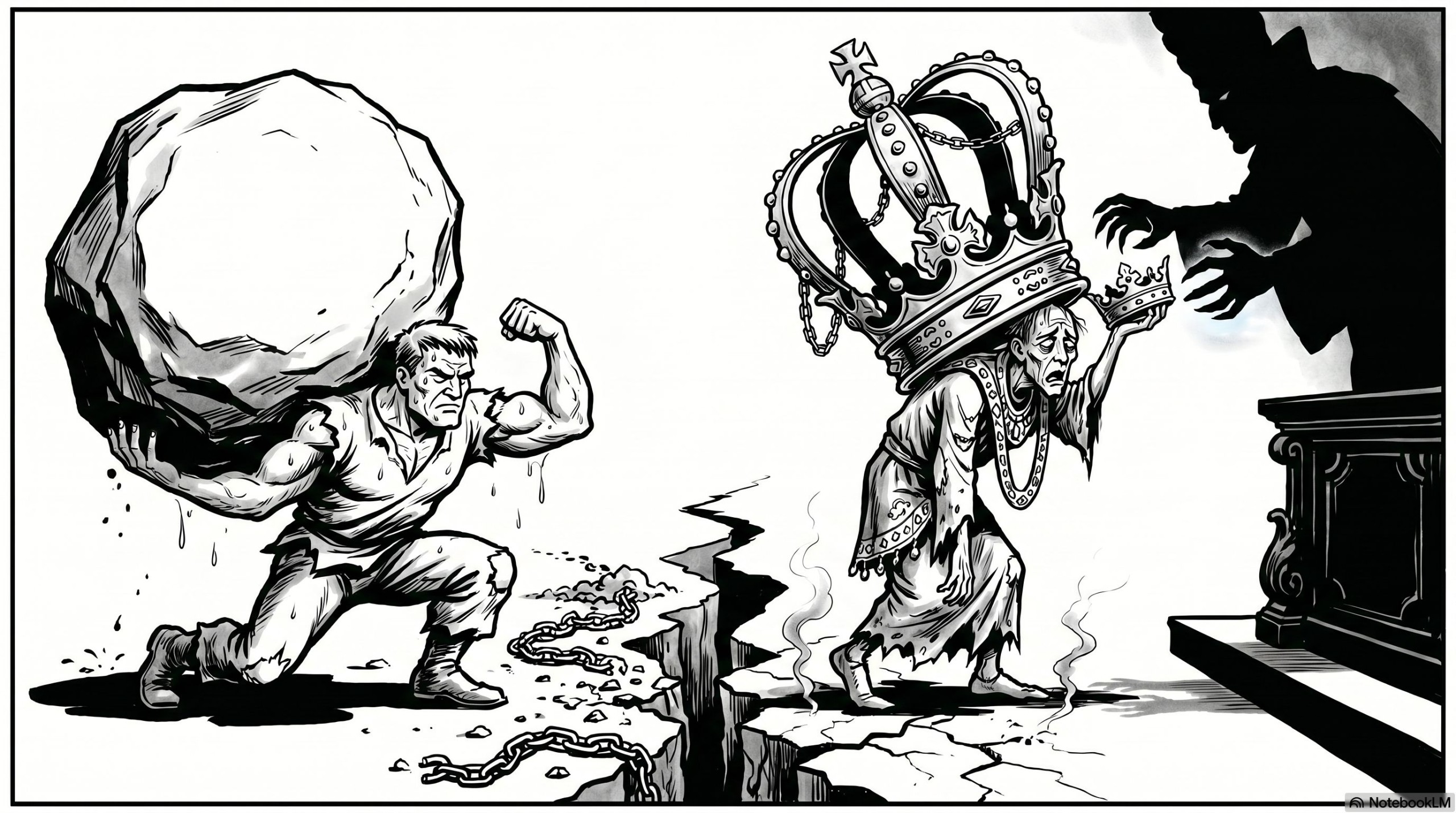
But not all Tension is equal. Some Tension is real. The weight is heavy because the weight is heavy. The conversation is hard because the disagreement is real. The kid is pushing because the kid is three. You didn’t make any of this up. Reality handed it to you and you either meet it or you collapse. This kind of Tension builds. Meeting it is how muscles, marriages, and characters get made.
Other Tension is manufactured. Performed. Offered up. You weren’t handed it. You invented it, or you volunteered for it, so you could display it. This kind of Tension doesn’t build anything. It just burns energy in exchange for the feeling that you’re doing something important.
Sallust noticed this about two thousand years ago. In his Histories he wrote:
Namque pauci libertatem, pars magna iustos dominos volunt.
Few men desire liberty. Most men wish only for a just master.
Most people, most of the time, are not looking for freedom. They’re looking for a Just Master: a party, a church, a boss, an ideology, a cause, a parent figure who never quite stopped being the parent. Someone who will tell them where to stand and what to suffer for. And once they find him, they invent a tax to pay him. They manufacture Tension in his honor. They call this devotion, or commitment, or being a good citizen, or being a serious Christian, or being an activist, or being a team player. What it actually is, is a Sacrificial Offering of Tension.
The pattern shows up in every direction you look.
Religions stack observance rituals. Jews (who get picked on for this more than they deserve, because every religion does it) separate milk dishes from meat dishes, wear distinctive beards and hats, and follow dietary laws more complicated than most people’s tax returns. Catholics wear ash crosses on their foreheads once a year so everyone at the grocery store knows. Evangelicals fast from things they didn’t need anyway and post about it on Instagram. Muslims memorize long recitations and pray five times a day in public spaces. The logic running underneath all of it is the same: if it’s difficult, it proves my faith. The more visibly difficult, the more my faith must show. The Tension IS the offering.
Politics runs on the same fuel. A partisan devotes hours to defending a politician who has never heard of him. He stands in the rain at a rally. He argues with strangers online at three in the morning. He breaks relationships with family over positions the party itself adopted last Tuesday and may abandon next Tuesday. The protester who throws a brick is making an offering. The protester who gets arrested on purpose is making a more visible one. Even peaceful, lawful protest (which is the appropriate form of the same instinct) operates on the principle that your willingness to stand in the sun for hours sanctifies the cause. The Tension validates the surrender.
Addicts do it with their substances. The ritual of procurement, the ritual of use, the hiding, the recovering, the relapsing. All of it becomes a structure of Tension around the chosen master, because a chemical master is still a master. Non-addicts do the same thing with non-functional habits: elaborate skincare regimens that take forty minutes, social media routines, identity-token collecting. Not all of these are bad (many are fine depending on context) but when the ritual is the point, the master has been identified.
Jordan Peterson became famous in part for telling young men to make their beds. The advice is real, and it works, because making your bed every morning is small, visible to nobody, and demands that you show up for yourself when no one is watching. That is also why so many people reject it. It doesn’t look like anything. It produces no badge. You can’t post it. Real discipline (the kind that actually builds a life) tends to be boring. The rituals people gravitate toward instead are showy. An unmade bed remains unmade because an unmade bed is not an acceptable Sacrificial Offering. It’s just a bed.
There’s another pattern, somewhat more common among women but not exclusive to them. Some people spend their entire adult lives dancing carefree through the meadow, picking daisies, and implicitly expecting someone else (a parent, a spouse, a boss, a government program) to keep them from walking off the cliff. They don’t want the Tension of navigating the terrain themselves. They want the Tension of being held in check by someone stronger. It looks like freedom from the outside. It’s dependency with a flower crown.
Here’s where it gets uncomfortable. The instinct to manufacture a Sacrificial Offering isn’t something that only happens to Collectivists, or only afflicts other people. Everyone has both a Collectivist and an Individualist impulse running inside them. Even the most ardent Individualist joins groups, holds identities, and negotiates with chosen masters. Even the most ardent Collectivist is motivated, underneath, by a self-interest he can’t escape. The fork isn’t between two types of people. It’s between two impulses inside every person, every day. The question is which one is winning right now, and how conscious you are of what you’re doing when you pay an offering.
So the assignment for this week is short. Look at the Tensions in your life and classify them. Some are real. Those are the ones building you. Meet them slow enough that they actually do some work. Don’t fight them. Don’t try to talk your way out of them. A new hobby that lets you avoid them is just another offering.
The others, the Sacrificial ones, deserve a closer look. Not because every ritual is bad (many are fine, or even good) but because if you don’t know what you’re paying and who you’re paying it to, you’ll find yourself exhausted at the end of the day with nothing actually built.
The rest of this week is about the disciplines for meeting real Tension. Tomorrow: Yes, how you start. Wednesday: No, how you keep going. Thursday: Focus, how you stay in contact with what matters. Friday: Rest, which turns out to be the strength move nobody expects.
The curl doesn’t do itself. Neither does anything else worth doing.