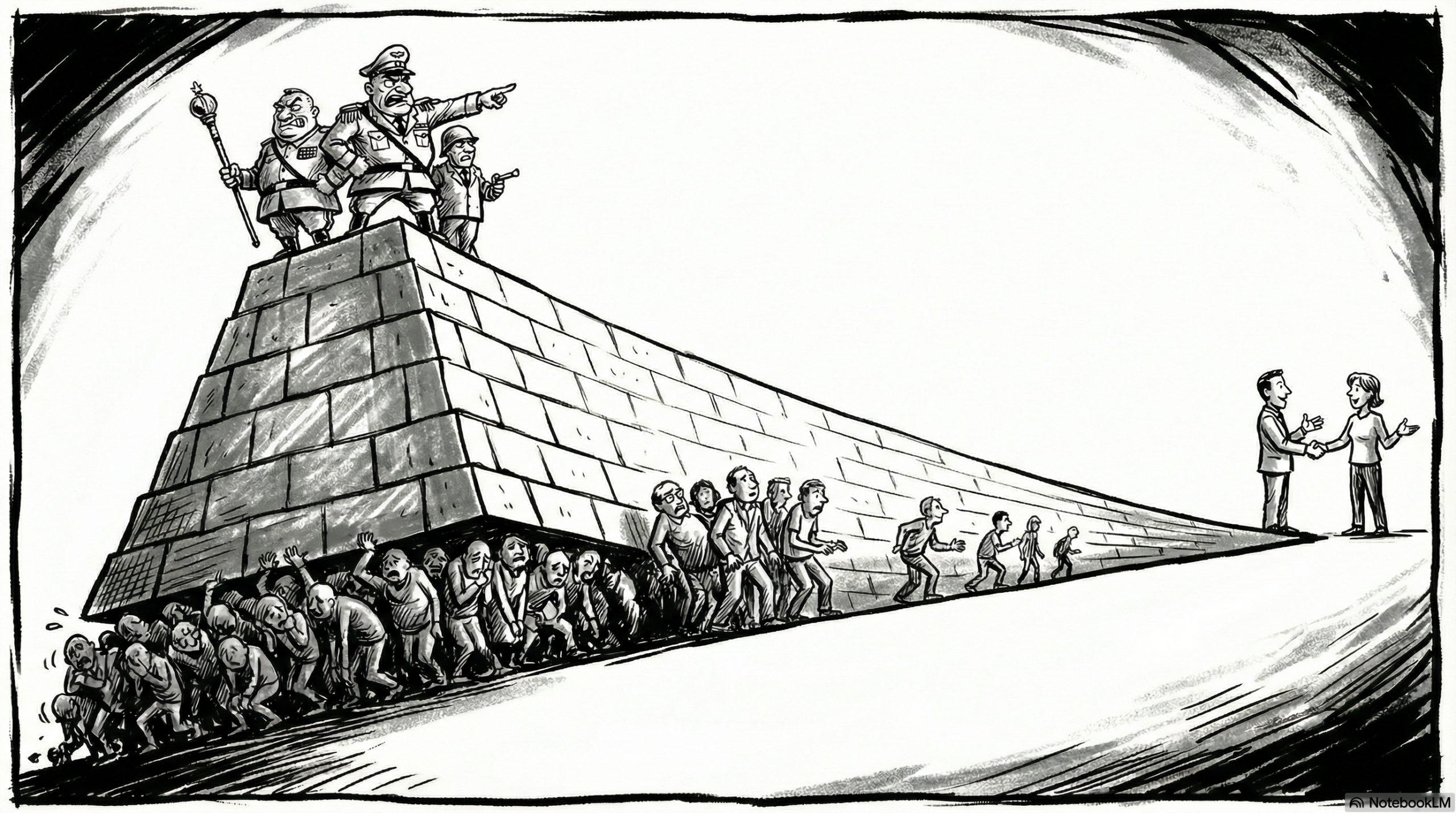
Being Charlie, Part 3: Meat and Potatoes


Third in a five-part series on what it would actually take to mean it when you say “I am Charlie Kirk.”


There’s a word people use without thinking about what it actually means: politics.

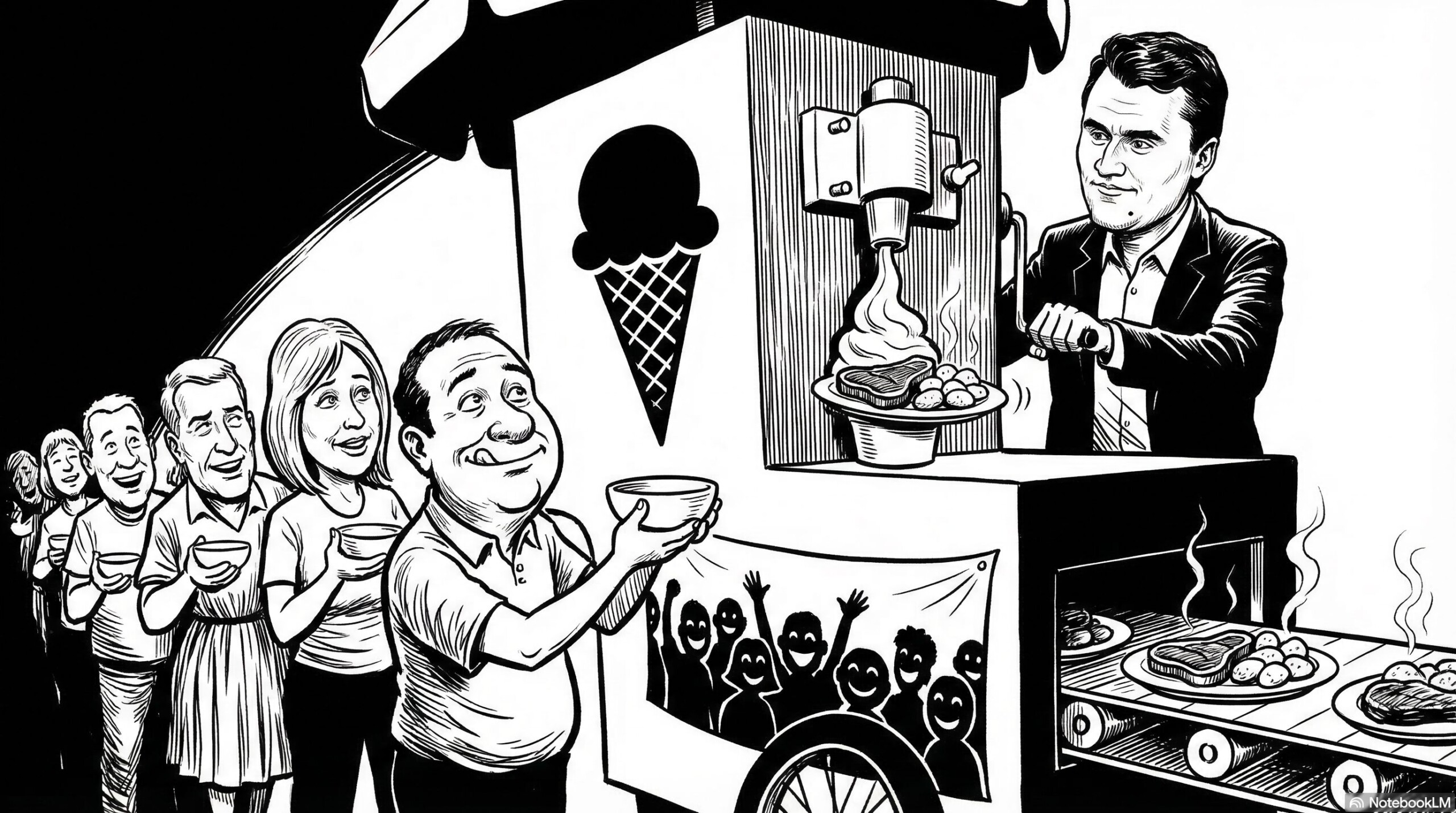
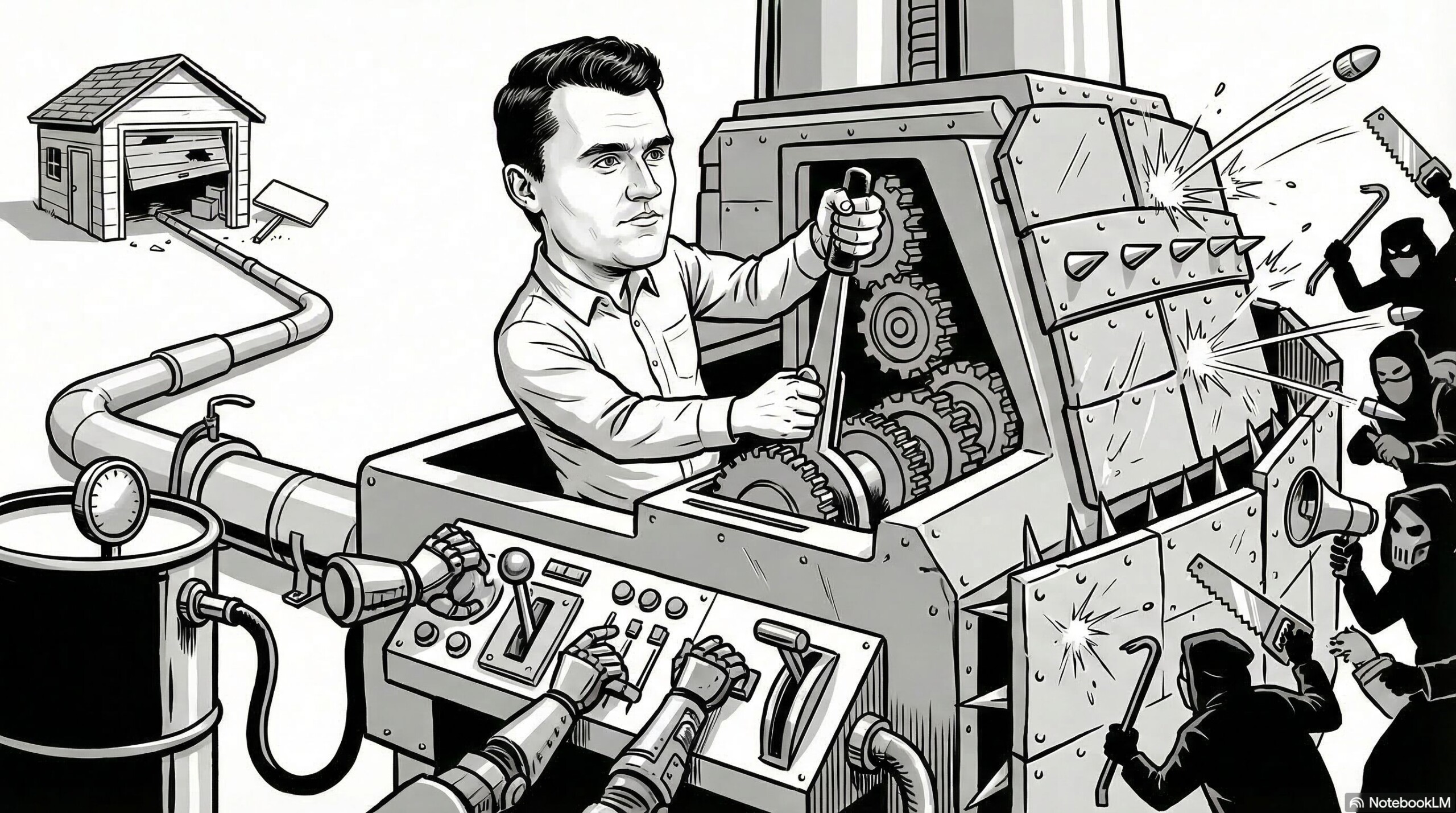
Strip away the civics-class veneer and substitute what the word actually describes in practice: manipulation. Every campaign ad, every rally speech, every carefully timed endorsement, every leaked memo, every strategic silence — it’s all manipulation. The nice version is “persuasion.” The honest version is that you’re trying to get people to do what you want them to do, and the ones who are best at it are the ones who make people feel like it was their own idea.

This isn’t a cynical observation. It’s the operating reality that anyone who enters politics eventually confronts. And here’s the paradox that sat waiting for Charlie Kirk when he stepped from campus organizing into the national political machine: if your cause is liberty — if your entire argument is that people should think for themselves, govern themselves, take responsibility for themselves — then the tool you’re forced to use to advance that cause is the opposite of the cause itself. You’re manipulating people toward freedom. Coercing them toward self-governance. Selling independence to a populace that, if we’re being honest, mostly wants to be told what to do.

Read more

Being Charlie, Part 2: The Gear-Shift


Second in a five-part series on what it would actually take to mean it when you say “I am Charlie Kirk.”


There’s a story about Alexander the Great — probably apocryphal, but useful. The version most people know is that he wept because there were no more worlds to conquer. The version closer to the ancient sources is darker: he wept because he couldn’t hold what he’d already taken. He was the greatest conqueror of the ancient world and a catastrophic administrator. His empire didn’t survive him by a single generation. It fractured into warring successor states before his body was cold.

This is the oldest problem in leadership: the skills that build a thing are not the skills that sustain it. Every founder hits this wall. The ones who conquer it learn to shift gears, from doing to delegating, from instinct to infrastructure, from moving fast to building things that hold. The ones who don’t end up like Alexander: brilliant, dead at thirty-two, and leaving behind a machine that nobody else knows how to operate.

Read more

Being Charlie, Part 1: Just a Kid


First in a five-part series on what it would actually take to mean it when you say “I am Charlie Kirk.”


There’s a scene in The Delta Force (1986) that captures something most people have forgotten. Terrorists hijack a plane and demand the Jewish passenger come forward. Father O’Malley, played by George Kennedy, stands up, walks forward. Abdul, the terrorist, says, “I did not call you.” The priest replies, “You called for all the Jews. I’m Jewish, just like Jesus Christ. You take one, you gotta take us all.” He was making a declaration: you meant to isolate them, but I’m stepping into their place.

That was the spirit of “I am Charlie Kirk” when people first said it after his assassination in September 2025. It meant: you thought you’d silence him, but I will carry on his work. I am the next Charlie Kirk.

Read more

Walking the Wedge: Where Everyone Actually Stands


Part 2 of 2 

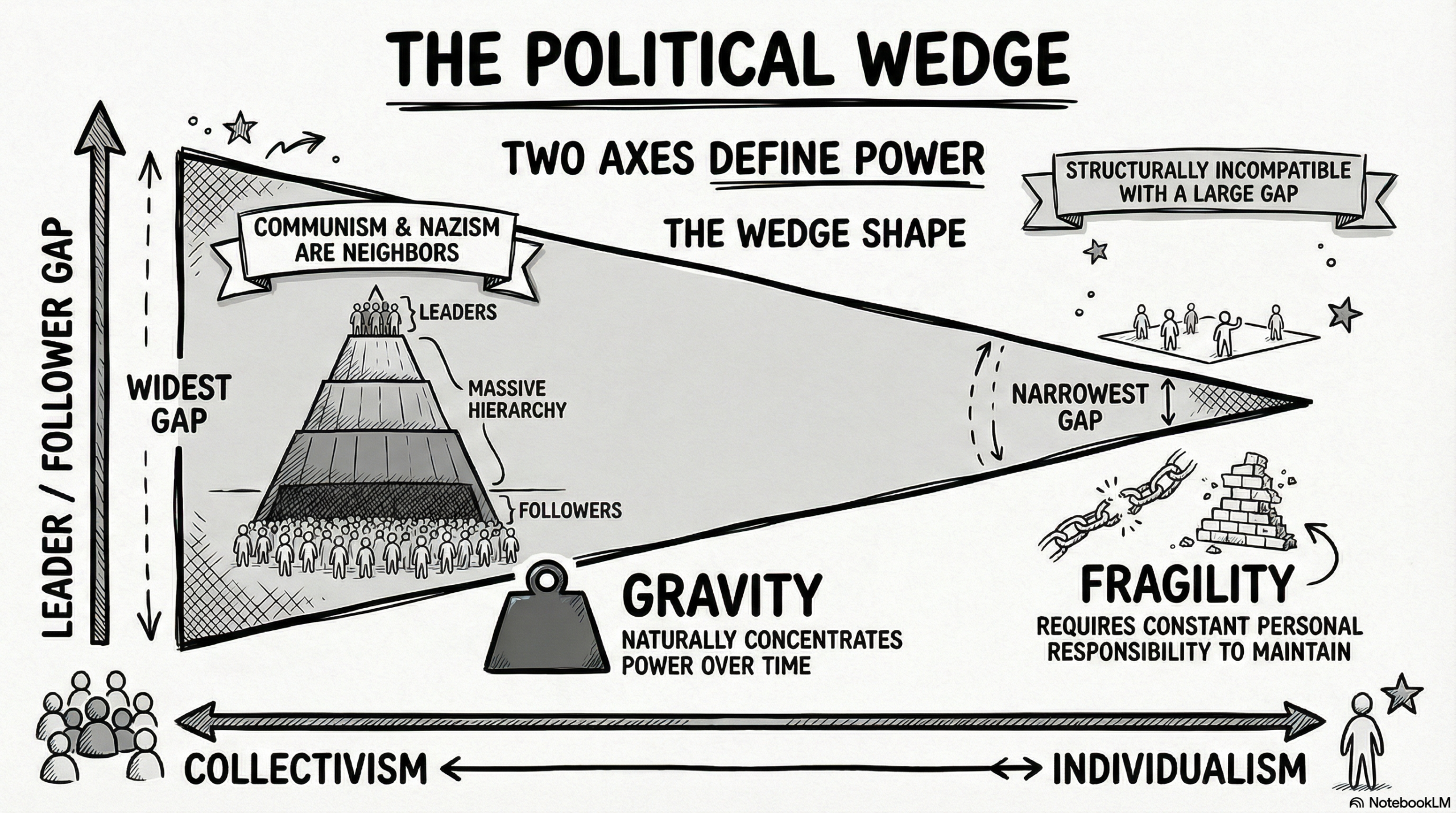
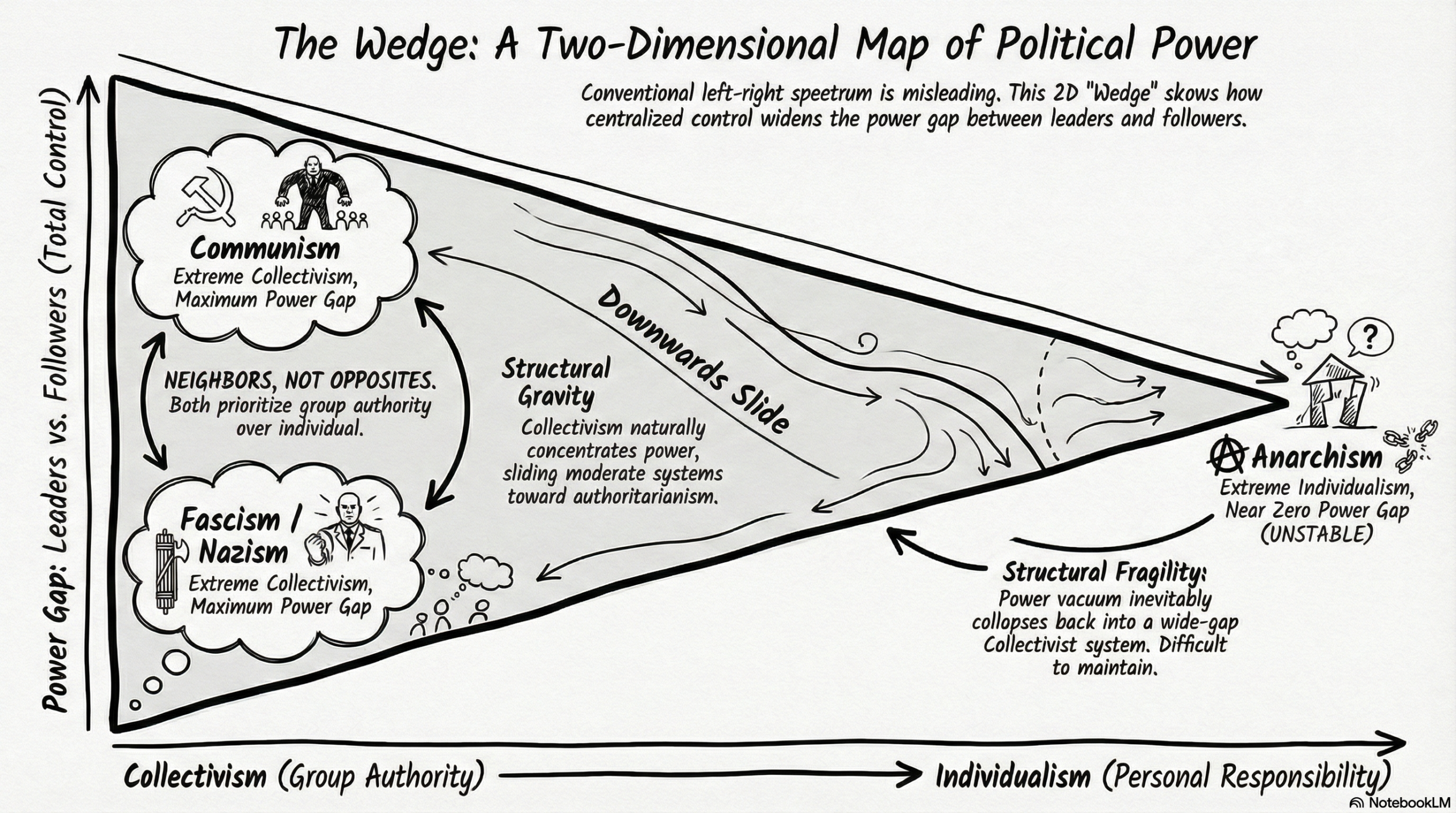
Yesterday I laid out the Political Wedge,  a two-dimensional spectrum with Collectivism and Individualism on the horizontal axis and the Leader/Follower gap on the vertical. The shape is a wedge because Collectivism structurally requires hierarchy while Individualism structurally resists it. If you missed it, read Part 1.

This week: where does everyone actually fall?

Ground rule before we start. Every position gets its strength acknowledged and its structural weakness exposed. The credibility of any framework depends on the person using it being willing to apply it honestly to their own tribe. So that’s what I’m going to do.

Read more

The Political Wedge: Why the Spectrum You Learned Is a Lie

[Click to view detailed infographic]
Part 1 of 2 

Trump recently promised he wouldn’t get the U.S. into a war. It’s the kind of line every politician delivers, and most people nod along without thinking about it too hard. But this one stuck with me, not because of what he said, but because of what it exposed.

Republicans and Democrats don’t just disagree about war policy. They disagree about what the word “war” means.

Look at the pattern. Republican military engagements have historically come with specific goals, timelines, and exit strategies. H.W. Bush’s Gulf War had a clear objective, liberate Kuwait, a broad coalition and a withdrawal. Reagan’s Grenada was in and out. Democratic military engagements, by contrast, have a habit of becoming open-ended nation-building projects: LBJ’s Vietnam, Obama’s Libya.

Clean story. Except it falls apart the moment you say the name George W. Bush.

Read more