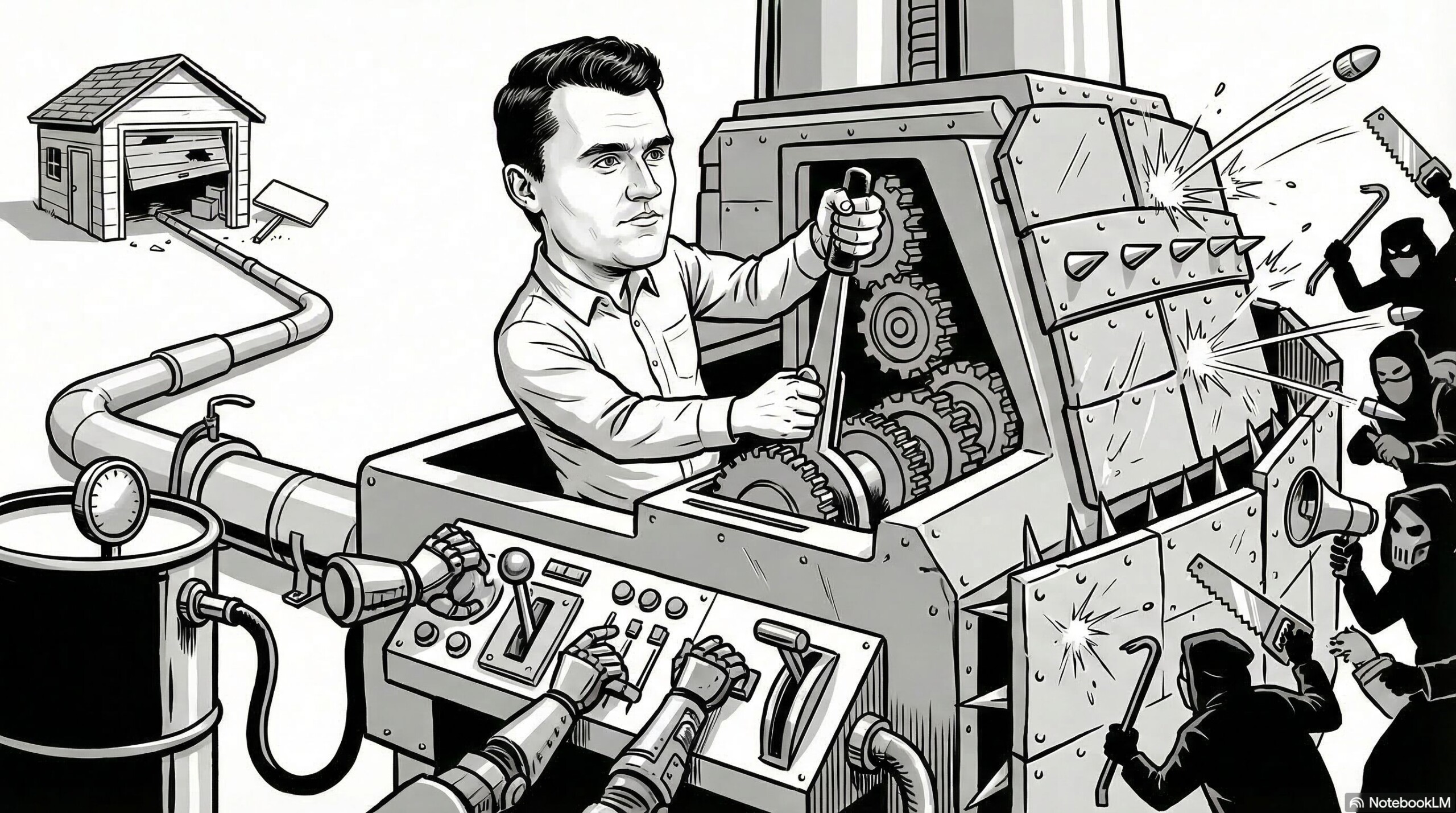
Second in a five-part series on what it would actually take to mean it when you say “I am Charlie Kirk.”
There’s a story about Alexander the Great — probably apocryphal, but useful. The version most people know is that he wept because there were no more worlds to conquer. The version closer to the ancient sources is darker: he wept because he couldn’t hold what he’d already taken. He was the greatest conqueror of the ancient world and a catastrophic administrator. His empire didn’t survive him by a single generation. It fractured into warring successor states before his body was cold.
This is the oldest problem in leadership: the skills that build a thing are not the skills that sustain it. Every founder hits this wall. The ones who conquer it learn to shift gears, from doing to delegating, from instinct to infrastructure, from moving fast to building things that hold. The ones who don’t end up like Alexander: brilliant, dead at thirty-two, and leaving behind a machine that nobody else knows how to operate.